Preparing a coin collection for sale or appraisal mainly means organizing what you have, documenting it clearly, and handling each piece carefully so nothing is damaged or misidentified before an expert sees it. It does not mean cleaning coins, guessing at values, or trying to grade them yourself. The goal is simply to make the collection easy for a dealer, auction house, or appraiser to evaluate accurately.
Why Preparation Matters
An unsorted box of coins, envelopes, and loose paper takes longer for anyone to assess, and that time often gets reflected in the offer or the appraisal fee. A well-organized collection also protects you from an unclear or rushed evaluation, since anyone reviewing it can see exactly what is present and how it has been stored. This is especially useful if you inherited a collection and have limited background on what you’re holding, or if you’re comparing more than one opinion before deciding what to do next, which is discussed further in the buying and selling archive.
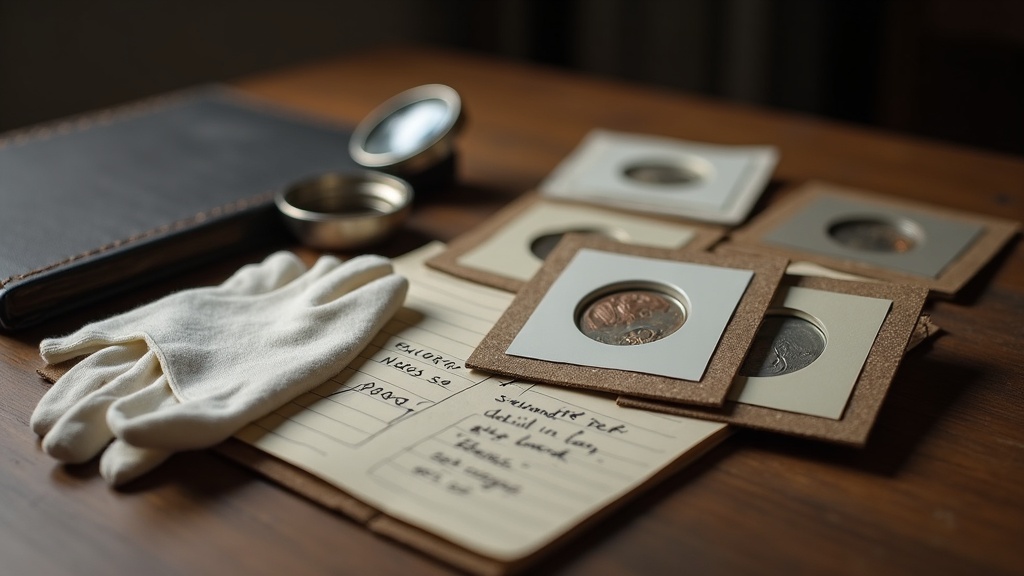
Step 1: Inventory Everything Before You Touch Anything
Start with a simple written or digital list. For each coin or group of coins, note:
- Country of origin and denomination
- Approximate date or date range, if visible
- Mint mark, if present
- Current holder type (album, folder, flip, capsule, or loose)
- Any paperwork that came with it, such as a certificate, purchase receipt, or auction description
Photograph each coin or group under decent light before moving anything. This creates a record of the collection’s condition at the time you started, which is useful if pieces are later separated for sale or if you’re working with more than one buyer.
Step 2: Sort by Category, Not by Guessed Value
Group coins by broad category rather than trying to rank them by worth. Typical groupings include U.S. coinage, world and ancient issues, and bullion products. If you’re unsure how to categorize a piece, the US coins and history archive and the world and ancient coins archive cover many common series and can help you identify what you’re looking at before an appraisal. Separating bullion coins and bars from numismatic pieces is particularly helpful, since bullion is generally assessed differently, with more weight placed on metal content and condition than on rarity; the precious metals and bullion archive explains how that category is typically evaluated.
Step 3: Leave the Coins Alone Physically
One of the most common and costly mistakes is cleaning coins before a sale or appraisal. Polishing, dipping, or scrubbing a coin almost always reduces its value to collectors, even if it makes the coin look shinier to an untrained eye. Original surfaces, toning, and wear patterns are part of what a grader or appraiser examines, and altering them can permanently change how a coin is assessed. If you’re not sure whether a coin has already been cleaned, that’s a question worth raising with whoever evaluates it rather than something to try to fix yourself.
Handle coins by their edges, avoid touching the faces, and keep them in their existing holders whenever possible. If coins are loose, individual flips or capsules are a reasonable way to protect them during transport without needing to remove them from their current state.
Step 4: Gather Any Supporting Documentation
Old receipts, prior appraisals, auction catalog pages, or grading service certificates all add useful context. They don’t set the current value, but they help establish provenance and history, which can matter for certain coins. If a coin is already in a certified holder from a third-party grading service, keep the holder intact and note the certification number rather than removing the coin.
| Item to Prepare | Why It Helps |
|---|---|
| Written inventory list | Speeds up review and reduces confusion about what’s included |
| Photos of each coin or lot | Documents condition before handling or transport |
| Original holders and packaging | Preserves surfaces and any existing certification |
| Purchase records or prior appraisals | Adds provenance and history for context |
| Notes on storage conditions | Helps explain toning, wear, or environmental exposure |
Step 5: Decide How You Want the Collection Evaluated
There are several common paths for getting a collection assessed: a local coin shop, a mail-in service, a specialized appraiser, or an auction house if the collection includes higher-value or unusual material. Each has different turnaround times, fee structures, and levels of specialization. If you’re considering an auction, understanding how coin auctions work before you commit helps set realistic expectations about timelines and fees. If you’re leaning toward a direct sale to a dealer, it’s worth reading about how dealer buyback policies typically work so you understand how offers are usually structured.
Whichever route you choose, getting more than one opinion on a mixed or valuable collection is a reasonable and common practice, not a sign of distrust. Legitimate dealers and appraisers are generally comfortable with a client seeking a second opinion, and learning how to evaluate a dealer’s reputation beforehand can help you avoid high-pressure situations. A rushed sale, an offer that seems designed to close quickly, or reluctance to let you take coins elsewhere for comparison are all reasons to slow down.
Step 6: Ask Questions Before You Sell
Before finalizing anything, it helps to ask how the person or firm reached their assessment, what factors they weighed most heavily, and whether the offer is negotiable. A list of questions to ask before buying from a coin dealer applies almost as directly to selling, since many of the same reputational and process questions matter in both directions. If bullion is part of the collection, understanding what determines a coin’s melt value versus its collectible premium can help you follow the reasoning behind an offer rather than accepting a number without context.
What Not to Do
- Don’t clean, polish, or attempt to “improve” any coin’s appearance.
- Don’t remove coins from certified holders to inspect them more closely.
- Don’t accept the first offer under time pressure without comparing it elsewhere.
- Don’t assume every old or unusual coin is automatically rare or valuable; condition, mintage, and demand all factor in.
- Don’t discard any paperwork, boxes, or envelopes that came with the collection until after the evaluation is complete.
Frequently asked questions about preparing a coin collection for sale
Should I clean my coins before selling them?
No. Cleaning, polishing, or dipping a coin typically removes original surface detail and can lower its value to collectors, even if it looks brighter. Leave coins exactly as you found them and let an appraiser or dealer assess their current condition.
Do I need an appraisal before selling a coin collection?
It’s not always required, but a formal appraisal or a second opinion is useful for larger or mixed collections, since it gives you an independent point of comparison before accepting any offer from a single dealer or buyer.
How do I find out what my coin collection is worth?
Current value depends on condition, rarity, metal content, and market demand at the time of sale, so it’s best determined by a qualified appraiser, reputable dealer, or grading service rather than by online estimates or outdated price guides.
Should I get my coins graded before selling?
Grading through a recognized third-party service can add clarity and buyer confidence for higher-value or borderline coins, but it involves fees and time, so it’s usually discussed case by case with a dealer or appraiser rather than done for an entire collection automatically.
Is it better to sell a collection as a whole or coin by coin?
It depends on the mix of material involved; some buyers prefer whole collections for convenience, while individually selling standout pieces through an auction or specialist dealer can sometimes suit unusual or high-demand coins better. There’s no single correct approach.
Gold Coins Today publishes general information about coin collecting and precious metals, not financial, investment, tax or legal advice. We are writers and editors, not certified numismatists, appraisers, financial advisors or dealers. Coin and bullion values change constantly and depend on condition, authenticity and the current market — get a current appraisal or spot price from a qualified, reputable source before buying or selling, and consult a licensed financial advisor before treating precious metals as part of an investment strategy.