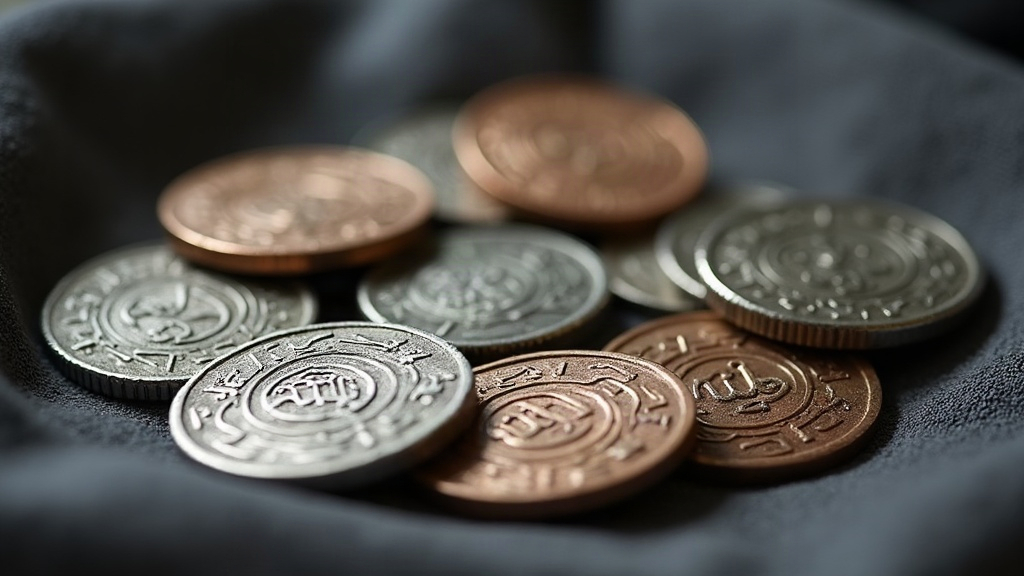
Collecting Ottoman Empire coins means learning to read Arabic-script money that spans roughly six centuries, from small silver akce pieces to later kuruş and lira coinage bearing a sultan’s calligraphic monogram. The actual skill that separates a casual buyer from a confident collector is simple to describe: decoding the mint name and date stamped into the coin itself. This article walks through that decoding process step by step, with a worked example and a table of reference dates, so you can read a coin rather than just admire it.
A quick frame: four names, one long currency system
Ottoman coinage moved through a few major denominations over time. The akce was the early silver workhorse, used from the 14th century onward. The para followed as a secondary silver unit, often struck alongside or below the akce in value. By the 19th century the kuruş had become the standard silver coin, and the gold and later silver lira rounded out the system as the empire modernized its mint operations. None of that history is unique to this article. What matters more for a collector holding a physical coin is the artwork and script on its faces, and that’s where the real identification work happens.
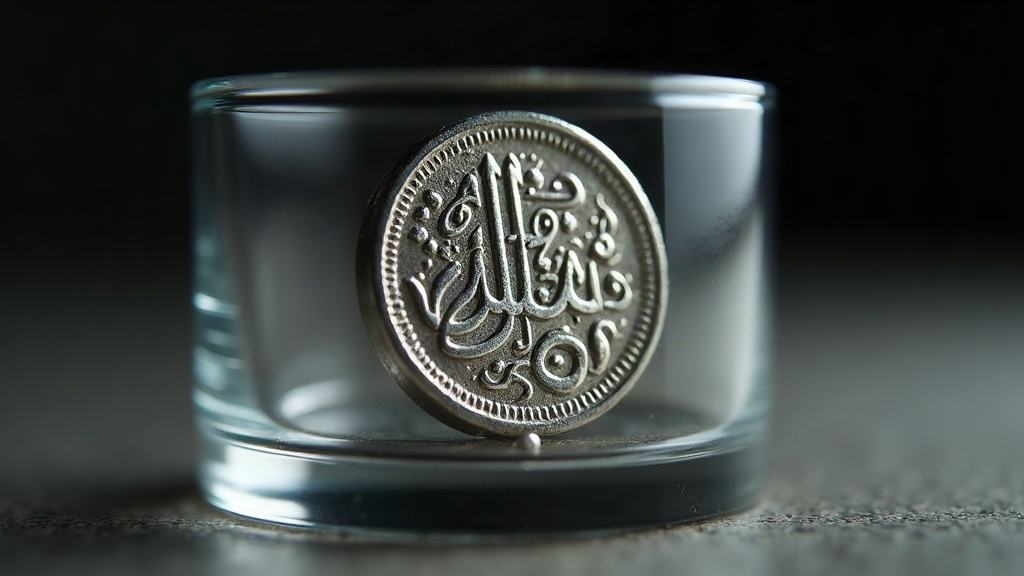
Every Ottoman coin from the sultan era carries the tughra, the sultan’s elaborate calligraphic signature, usually on one face. It functions the way a portrait does on Western coinage: it tells you who was reigning, without actually looking like writing to an untrained eye. Around and beneath it sits the information you actually need.
Step-by-step: reading the mint name and date
Ottoman coins encode three pieces of information in Arabic script and Eastern Arabic-Indic numerals: the mint city, a fixed accession-year number, and a regnal year number that increases annually. Put those three together correctly and you get an exact mint and date. Here is the method.
Step 1: Find the tughra side
Turn the coin so the ornate monogram faces up. This is almost always the obverse on coins from the 18th century onward. The tughra’s exact shape changed with each sultan, so experienced collectors can often identify the ruler from its silhouette alone. For a beginner, it’s enough to know this side anchors everything else.
Step 2: Locate the mint name
Below or beside the tughra, look for a short phrase. Many coins use a form of “duriba fi” or simply name the city directly, meaning “struck in.” Mint names appear in their Ottoman Turkish spelling, which can look different from the modern city name. A short reference table helps:
| Modern city | Ottoman mint name (as struck) |
|---|---|
| Istanbul | Qustantiniyye or, on later coins, Islambol |
| Cairo | Misr |
| Tunis | Tunus |
| Baghdad | Baghdad |
| Erzurum | Erzurum |
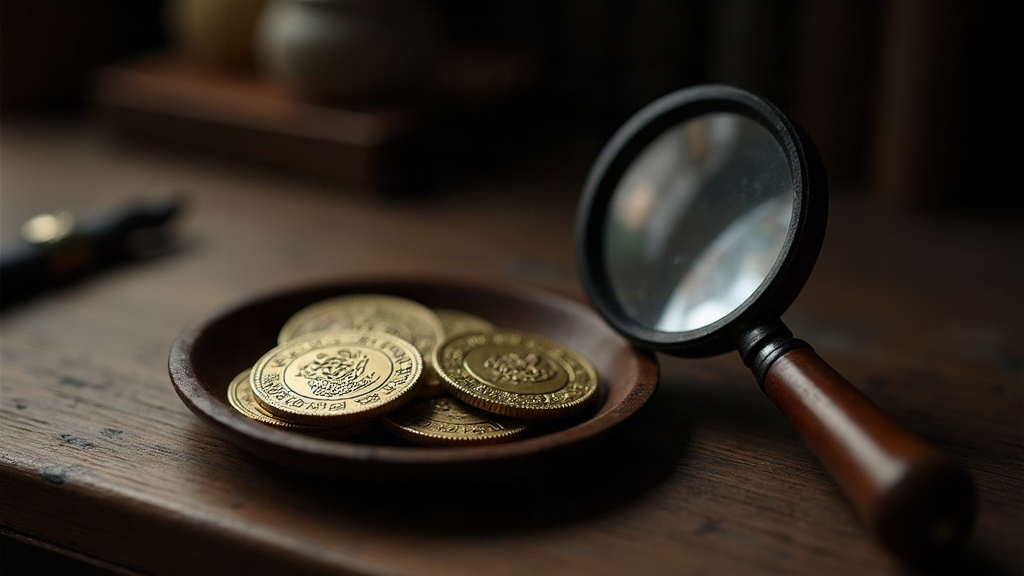
Mint marks can be worn nearly flat on circulated coins, so this step often takes a magnifier and patience, not just a clear eye.
Step 3: Read the numerals
Ottoman coins use Eastern Arabic-Indic digits, not the Western numerals most readers grew up with. Learning ten shapes unlocks every date on every coin:
| Western digit | Eastern Arabic-Indic form |
|---|---|
| 0 | ٠ |
| 1 | ١ |
| 2 | ٢ |
| 3 | ٣ |
| 4 | ٤ |
| 5 | ٥ |
| 6 | ٦ |
| 7 | ٧ |
| 8 | ٨ |
| 9 | ٩ |
Two separate numbers appear on most coins from the later empire. One is a fixed four-digit Hijri year: the year the current sultan took the throne. It never changes during that reign. The other is a smaller number, usually one or two digits, giving the regnal year of the strike. This second number increases by one almost every year the sultan remains in power.
Step 4: Calculate the Hijri strike year
The formula is short:
Hijri strike year = accession year (AH) + (regnal year number − 1)
Subtract one because the accession year itself usually counts as regnal “year 1.” Add the rest of the regnal count on top of the fixed accession date.
Step 5: Convert Hijri to Gregorian
The Islamic calendar is lunar, so its years don’t line up neatly with the solar Gregorian calendar. A widely used approximation is:
Gregorian year ≈ Hijri year − (Hijri year ÷ 33) + 622
This formula gets you within a year of the correct date in almost every case, which is close enough to identify a coin confidently. If precision matters for a sale or insurance record, cross-check the result against a dedicated Hijri-Gregorian date converter rather than relying on the shortcut alone.
Worked example
Suppose a coin’s tughra identifies Sultan Abdul Hamid II, whose accession year is 1293 AH. Below the tughra, the regnal year reads “25” in Eastern Arabic-Indic digits.
- Hijri strike year = 1293 + (25 − 1) = 1317 AH
- Gregorian year ≈ 1317 − (1317 ÷ 33) + 622 = 1317 − 39 + 622 = 1900
That coin was struck around 1900 CE, roughly a quarter-century into Abdul Hamid II’s reign. Combine that date with a legible mint name, say Qustantiniyye, and you now have a mint and date as specific as anything printed on a modern coin.
Reference table of accession years
Because the fixed accession year is the anchor for every calculation, it helps to recognize a few major sultans and the AH year their coins begin counting from. These accession dates are well documented in standard numismatic and historical references:
| Sultan | Accession (AH) | Accession (CE) |
|---|---|---|
| Selim III | 1203 | 1789 |
| Mahmud II | 1223 | 1808 |
| Abdulmecid I | 1255 | 1839 |
| Abdulaziz | 1277 | 1861 |
| Murad V / Abdul Hamid II | 1293 | 1876 |
| Mehmed V Reshad | 1327 | 1909 |
| Mehmed VI Vahideddin | 1336 | 1918 |
If you can identify the sultan from the tughra style, this table lets you skip straight to the regnal-year math above.
Complications worth knowing
A few things trip up new collectors working through this process. Coin dies sometimes stayed in use for several years without updating the regnal number, so a worn or poorly struck coin may show a blank or illegible second numeral. Some provincial mints used slightly different script conventions, which can make city names harder to match against a standard list. And overstriking, where an older coin was re-struck with a new design, occasionally leaves ghost traces of the earlier date beneath the current one.
None of this makes the method unreliable. It just means a magnifier, good lighting, and a willingness to compare a few reference images are part of the job. The same care that applies to any older or worn coin applies here: handle it by the edges, avoid any cleaning, and store it away from humidity, since Ottoman coins are often silver or copper alloys that tone or corrode with poor storage. The general principles in the coin collecting guide on identification and care apply just as much to Ottoman pieces as to US coinage, and the broader world and ancient coins archive covers other non-US series that use similarly unfamiliar dating systems.
Buying, authenticity, and value
Ottoman coins vary enormously in survival rate and condition. Common 19th-century kuruş and para pieces are generally plentiful, while earlier akce coinage, certain gold denominations, and coins from short or contested reigns are scarcer. What actually drives a given coin’s value is the same set of factors that applies to any collectible coin: condition, strike quality, rarity of the specific date and mint combination, and current buyer demand, not the coin’s age alone. A worn common k
Related reading
bullion, buying/selling and investing considerations, A Guide to the Kennedy Half Dollar.
Gold Coins Today publishes general information about coin collecting and precious metals, not financial, investment, tax or legal advice. This article was drafted with AI assistance and is not written or reviewed by certified numismatists, appraisers, financial advisors or dealers. Coin and bullion values change constantly and depend on condition, authenticity and the current market — get a current appraisal or spot price from a qualified, reputable source before buying or selling, and consult a licensed financial advisor before treating precious metals as part of an investment strategy.
How this article was made. It was drafted with AI assistance and published after automated checks. It has not been checked line by line against primary sources; articles that have been say so in a dated note. See our editorial policy.