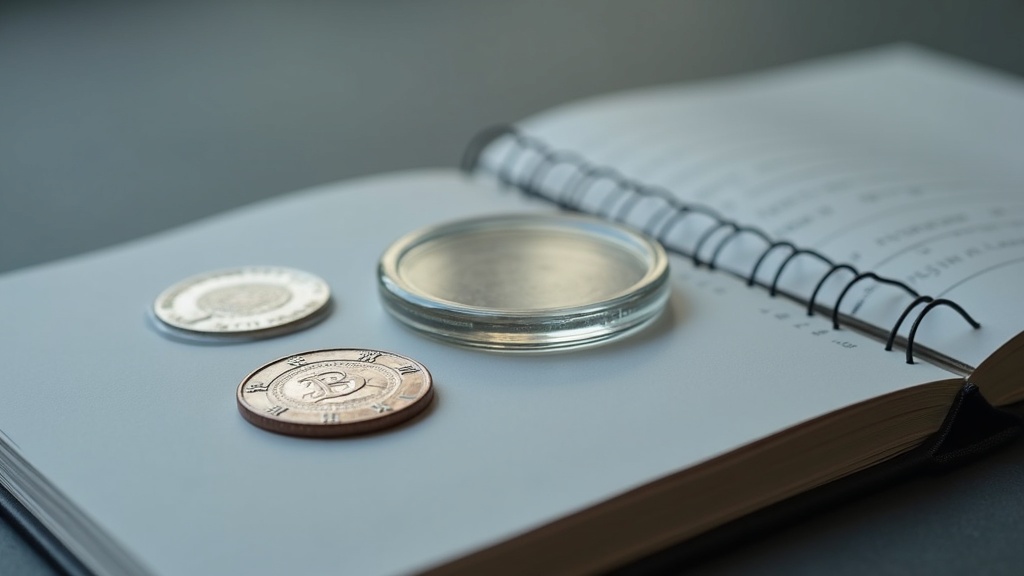
Coin holders generally fall into three categories: flips (flexible plastic or paper-and-mylar sleeves), capsules (rigid round holders that snap around a single coin), and albums or folders (books with cutout slots for building a set). Each protects a coin differently and suits different goals—flips are cheap and quick, capsules offer the sturdiest individual protection, and albums are built for organizing a series for display or reference. The right choice usually depends on how the coin will be handled, stored, and viewed over time.
Why holder choice matters
A coin’s surface is far more fragile than it looks. Fingerprints, airborne pollutants, PVC plastic residue, and simple friction from sliding in and out of a pocket or drawer can all leave marks that are effectively permanent. The right holder reduces the number of times a coin is touched or exposed to air and reduces the chance of scuffing against other coins or hard surfaces. This matters just as much for a modest bullion coin as it does for an older collectible, since once a surface is altered, it generally can’t be restored—which is also why cleaning a coin yourself is discouraged; see our explainer on why you should never clean a collectible coin for more on that. Holder selection is really just one piece of a broader storage plan, covered in more depth in our guide to how to store coins to prevent damage.
Flips: fast, cheap, and flexible
A “flip” is a folded pocket, usually made of soft vinyl or a cardboard-and-mylar combination, with two windows so a coin can be viewed from both sides without removal. They’re inexpensive, easy to label, and useful for sorting large numbers of coins quickly—dealers and collectors alike use them at coin shows and for mail order because they’re compact and light.
The trade-off is durability and, in the case of soft vinyl flips, chemical safety. Some older or lower-quality vinyl holders contain PVC plasticizers that can migrate onto a coin’s surface over months or years, leaving a hazy or sticky residue that is difficult to remove without risking further damage. Cardboard-and-mylar flips avoid that particular problem but are less forgiving of repeated handling, since the staple or fold can nick a coin’s edge if you’re not careful. Flips are best thought of as a short-term or transitional holder—useful while sorting, transporting, or temporarily storing coins—rather than a permanent home for something you intend to keep in top condition indefinitely.
Capsules: individual, rigid protection
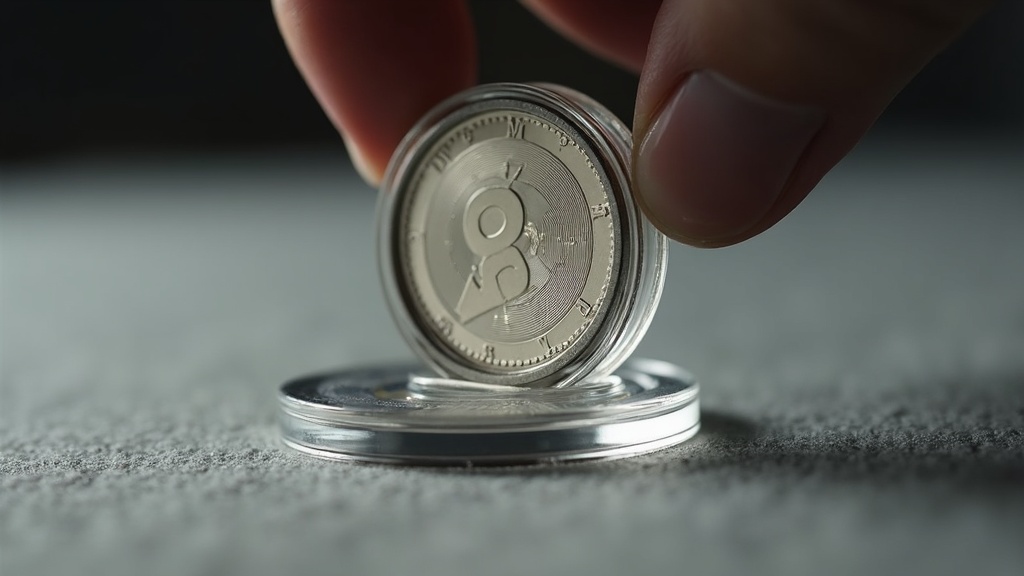
A capsule is a two-piece rigid plastic holder, typically acrylic, that snaps together around a single coin and holds it snugly between a foam or plastic ring sized to the coin’s diameter. Because the coin doesn’t move once seated, capsules do a good job of preventing surface contact and are a common choice for bullion coins, proof coins, and anything a collector wants to store or display without repeated handling.
Capsules come in standard sizes matching common coin diameters, so getting a snug fit matters—a coin that’s too loose can rattle and pick up tiny marks, while forcing a coin into an undersized capsule risks scratching the rim. Many graded coins are already sealed in a hard plastic holder (often called a “slab”) by a third-party grading service, which serves a similar protective purpose but also carries authentication and grade information; what documentation should travel with a graded coin, and how to read it, is covered separately in our guide to graded coin documentation.
Albums and folders: built for a series
Albums and folders are designed less for individual coin protection and more for organizing and displaying a set—think a Lincoln cent album with a slot for every date and mint mark, or a folder for a state quarter series. Folders are simple cardboard holders with round punched holes that leave the coin partially exposed on both sides; albums typically use plastic slide pages or snap-in panels that cover the coin more fully.
The convenience of seeing an entire set at a glance comes with a real trade-off: coins in folders are often held only by the pressure of the cardboard itself, and both folders and older album styles can expose coins to more air and handling than a sealed capsule. Sliding album pages, in particular, can leave fine hairline marks on a coin’s surface over repeated opening and closing. For coins bought mainly for their bullion content or for pieces where surface preservation is a priority, many collectors prefer to keep the coin in a capsule or flip and use a separate reference album, log, or spreadsheet just for tracking the set. A broader comparison of album, folder, and other holder styles is available in our dedicated piece on albums versus folders versus other holders.
Comparing the three at a glance
| Holder type | Best suited for | Main advantage | Main limitation |
|---|---|---|---|
| Flip | Sorting, transport, temporary storage | Inexpensive, quick to use | Some vinyl types risk residue; less durable long-term |
| Capsule | Individual coins, bullion, proofs | Rigid, snug, minimal handling | Needs correct size; less convenient for viewing a whole set |
| Album/folder | Building and displaying a series | Organized, easy to view a full set | More exposure and handling; some styles can mark surfaces |
Material matters as much as shape
Regardless of holder style, the plastic itself matters. Holders described as “archival” or “inert” are generally made from materials like Mylar, polyethylene, or certain acrylics that don’t react with metal over time, while some older or cheaper vinyl products contain plasticizers that can slowly off-gas and settle onto a coin’s surface. This is one of the few areas of coin care where a small material choice compounds significantly over years of storage. It’s also worth remembering that no holder substitutes for stable environmental conditions—temperature swings and humidity affect coins inside a holder too, which is why holder selection is usually discussed alongside broader storage and custody considerations for anyone holding a meaningful quantity of coins or bullion.
A note on sales pressure
Holders themselves are a low-stakes purchase, but they’re sometimes bundled into higher-pressure pitches—for example, a seller emphasizing that a coin “must” be upgraded to a particular holder or slab before it can be sold or insured. Legitimate dealers don’t rely on urgency or fear to sell basic supplies, and it’s reasonable to get a second opinion or an independent appraisal before making a large purchase of any kind, holder-related or otherwise. Readers who want more background on that broader pattern can see our overview of precious metals sales tactics to watch for, and those weighing insurance or appraisal needs for a growing collection may find our piece on coin insurance and appraisals useful as well.
Frequently asked questions about coin holders
What’s the best holder for storing silver coins long term?
There’s no single “best” holder for every situation—capsules offer strong individual protection with minimal handling, while flips work for shorter-term or transitional storage. Choosing archival-quality, PVC-free materials and stable storage conditions matters more than any one holder style.
Do plastic coin flips damage coins?
Some soft vinyl flips contain plasticizers that can migrate onto a coin’s surface over time, leaving residue. Cardboard-and-mylar flips avoid this specific issue but aren’t meant for indefinite storage. Checking that a flip is labeled PVC-free is a simple precaution.
Can I put a graded coin slab inside another holder?
Graded coins are already sealed in a protective holder by the grading service, and that holder is generally meant to remain intact, since breaking the seal can affect how the coin is treated on resale. Additional protection, if wanted, usually comes from an outer box or case rather than opening the slab.
Are coin albums safe for valuable coins?
Albums are convenient for viewing a full series but generally involve more coin handling and surface exposure than a sealed capsule. Many collectors keep especially valuable or surface-sensitive coins in individual capsules and use an album, log, or list only for tracking the set visually.
How do I know what size capsule my coin needs?
Capsules are sized to standard coin diameters, so checking your coin’s diameter in millimeters against a sizing chart from the holder manufacturer is the usual approach. A snug, non-rattling fit without forcing the coin in is the general goal.
Gold Coins Today publishes general information about coin collecting and precious metals, not financial, investment, tax or legal advice. We are writers and editors, not certified numismatists, appraisers, financial advisors or dealers. Coin and bullion values change constantly and depend on condition, authenticity and the current market — get a current appraisal or spot price from a qualified, reputable source before buying or selling, and consult a licensed financial advisor before treating precious metals as part of an investment strategy.
Related reading
Why You Should Never Clean a Collectible Coin, How to Store Coins to Prevent Damage, Precious Metals Sales Tactics to Watch For.