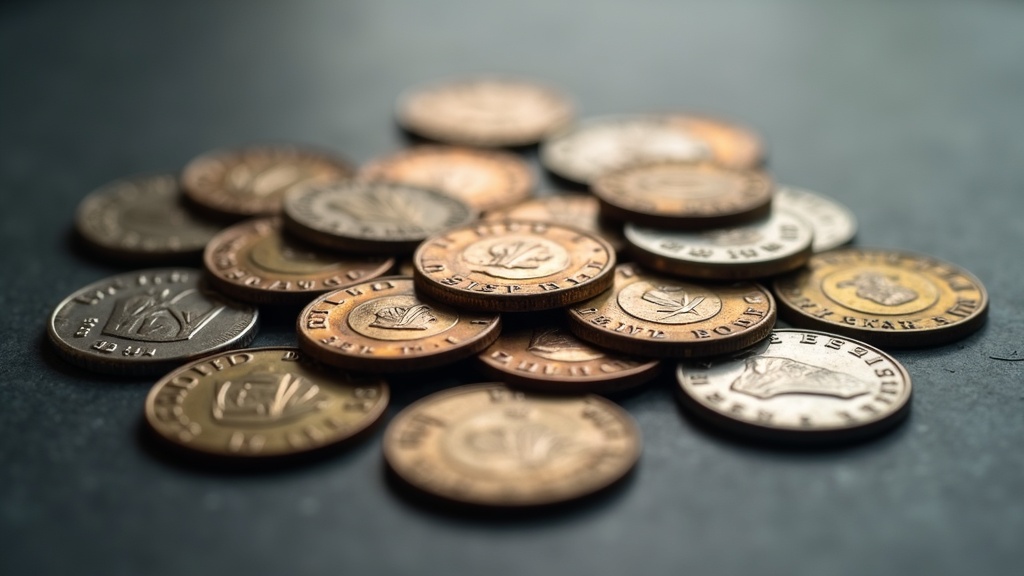
The date on a US coin sits on the obverse (front), usually below the main portrait or design element, while the mint mark is a small letter — such as P, D, S, W, C, O, or CC — found near the date, under the bust, or on the reverse depending on the coin’s era and denomination. Together they tell you when and where the coin was struck, which is the starting point for identifying it, not for estimating what it might be worth.
Reading these two details correctly is a basic literacy skill for anyone handling US coins, whether you’re sorting through a jar of change, examining an inherited collection, or just trying to understand what a dealer is telling you. This guide walks through where to look, what the letters mean, and how to handle coins that are worn, cleaned, or otherwise hard to read.
Where to find the date
On most US coins, the date appears somewhere along the bottom edge of the obverse, often just beneath the main design — a portrait, bust, or symbolic figure. A few things to keep in mind:
- Lincoln cents show the date to the right of Lincoln’s portrait.
- Jefferson nickels place the date below the bust on older designs, though some modern redesigns moved it slightly.
- Roosevelt dimes, Washington quarters, and Kennedy half dollars all place the date near the bottom edge of the obverse, sometimes partially hidden by the rim on worn coins.
- Older designs, like Morgan or Peace dollars, put the date at the very bottom of the obverse, beneath a Liberty figure or eagle motif.
Commemorative and modern collector coins can vary more, occasionally placing the date on the reverse or incorporating it into the design itself, so it’s worth checking both sides if it isn’t immediately obvious.
Where to find the mint mark
The mint mark’s location has changed over the decades and by denomination, which is part of why it can feel confusing at first. Some general patterns:
- On many older coins (pre-1965 or so), the mint mark sits on the reverse, often near the bottom edge below the wreath, eagle, or other design element.
- On Lincoln cents starting in the late 1960s, the mint mark moved to the obverse, just below the date.
- On modern quarters, dimes, and dollars, the mint mark is typically on the obverse near the date or along the rim, though placement varies by series and by the specific redesign year.
- Coins struck at the Philadelphia mint historically had no mint mark at all for many decades — an absence of a letter effectively meant “Philadelphia” until that changed for most denominations later in the twentieth century.
Because placement isn’t universal, the most reliable approach for an unfamiliar coin is to compare it against a reference image of that exact series and year rather than assuming the mark will be in the same spot as a different coin you already know.
What the mint mark letters mean
| Letter | Mint | Notes |
|---|---|---|
| P | Philadelphia | Often blank on older coins; letter added to most denominations later |
| D | Denver | Not to be confused with the historic Dahlonega mint, also “D,” used only in the 1800s |
| S | San Francisco | Used for both circulation and proof coinage at different points |
| W | West Point | Mainly used on bullion and commemorative coins |
| O | New Orleans | Historic mint, closed in the early twentieth century |
| CC | Carson City | Historic mint, operated briefly in the 1800s |
| C | Charlotte | Historic gold-only mint from the 1800s |
Because Denver and Dahlonega both used a “D,” context matters — a Dahlonega mark only appears on nineteenth-century gold coinage, so a “D” on a coin from the twentieth century onward is Denver. This is the kind of overlap that catalogs and reference books exist to sort out, and it’s a good reminder that a single letter rarely tells the whole story on its own.
Reading dates and mint marks on worn coins
Circulated coins, especially older ones, often have softened details from decades of handling. A few practical steps help:
- Use raking light. Tilt the coin under a light source so the light skims across the surface at a low angle; this often makes shallow, worn digits more visible than looking at the coin straight on.
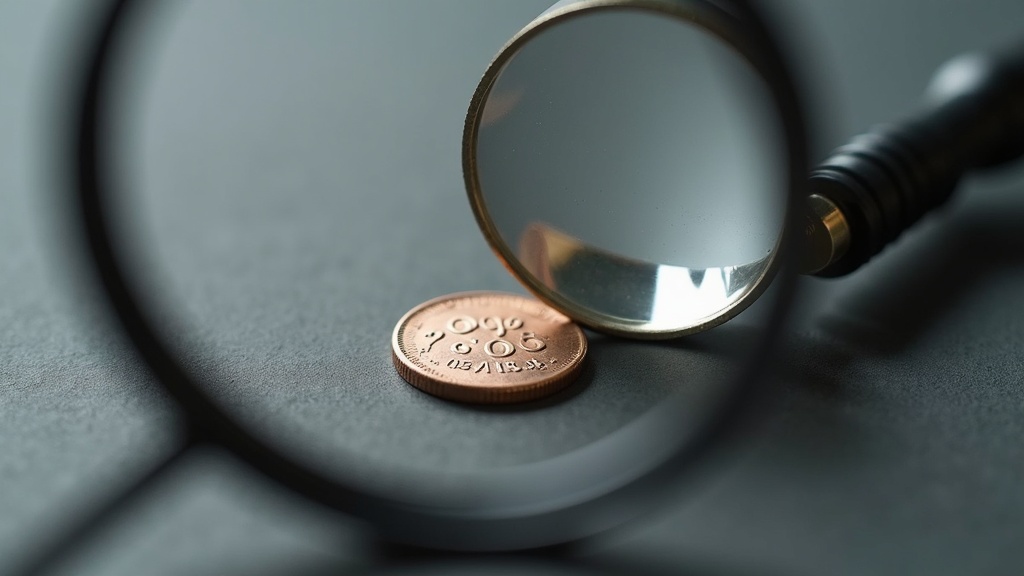
- Use magnification. A simple loupe or magnifying glass can resolve a digit that looks like a smudge to the naked eye.
- Check both faces. If the mint mark or date isn’t where you expect, confirm you’re looking at the correct side and design era for that denomination.
- Avoid cleaning the coin to “bring out” the date. Cleaning a coin, even gently, can remove original surfaces and is generally considered to reduce a coin’s collectible appeal rather than improve it — a distinct issue from the date simply being hard to read.
If a date or mint mark is genuinely illegible even under magnification and good lighting, that’s useful information in itself: it usually points to a coin that has seen heavy circulation, which is one of several factors that affects how a coin is assessed.
Why the date and mint mark matter
The date and mint mark are identifying information, not a price tag. They let you determine which specific issue of a series you’re holding, since design details, mintage patterns, and historical context can differ meaningfully year to year and mint to mint. From there, factors like overall condition, any doubling or die varieties, and current market demand all play into how a coin is evaluated — and those are questions best explored with a current reference guide or an independent appraisal rather than guesswork. If you’re new to the hobby generally, it’s worth spending time with the basics before worrying about specific dates at all; you can find our broader introduction to the site and what we cover over on the Gold Coins Today homepage.
It’s also worth being cautious of anyone who uses a date or mint mark alone to pressure you into a quick purchase or sale. A legitimate dealer or appraiser will take the time to examine the coin properly rather than quoting a number off a single glance at the date. If you’re ever facing a high-pressure sales pitch, especially around rare-date coins or “scarce mint mark” claims, a second, independent opinion before any large transaction is a reasonable and normal step.
For neutral reference material, the United States Mint publishes historical information on mint facilities and coin designs, and organizations like the American Numismatic Association offer educational resources for people learning to identify and research coins on their own.
Frequently asked questions about reading dates and mint marks
Why doesn’t my coin have a mint mark at all?
For much of US history, coins struck in Philadelphia carried no mint mark, since it was treated as the default mint. A blank space where a mint mark would normally appear often simply means the coin was struck in Philadelphia, though this varied by denomination and year.
What does it mean if the mint mark looks doubled or shifted?
Some coins show a doubled or re-punched mint mark from the manufacturing process, which collectors sometimes note as a variety. Confirming this accurately usually requires comparing the coin closely against known references rather than judging from a quick glance.
Can I tell a coin’s value just from its date and mint mark?
No. The date and mint mark identify which issue you have, but condition, wear, any errors, and current collector demand all factor into how a coin is assessed. A current appraisal from a qualified source is the reliable way to get that fuller picture.
Why is the mint mark in a different spot on my two coins of the same denomination?
Mint mark placement has changed over time as designs were updated, so a 1960s coin and a 2010s coin of the same denomination may show the mark in different locations. Checking a reference for that specific design era clears up most confusion.
Should I clean my coin so I can read the date better?
Generally, no. Cleaning can alter or damage the surface of a coin and is widely viewed as reducing its collectible appeal, even if it temporarily makes a date look clearer. Gentle handling, good lighting, and magnification are safer ways to read a worn date.
Gold Coins Today publishes general information about coin collecting and precious metals, not financial, investment, tax or legal advice. Articles on this site are drafted with AI assistance (see our editorial policy) and are not written or reviewed by certified numismatists, appraisers, financial advisors or dealers. Coin and bullion values change constantly and depend on condition, authenticity and the current market — get a current appraisal or spot price from a qualified, reputable source before buying or selling, and consult a licensed financial advisor before treating precious metals as part of an investment strategy.
Related reading
How Coin Collecting Became Popular in America, Understanding Exonumia: Tokens, Medals & Collectibles, The Story of the 1933 Double Eagle.