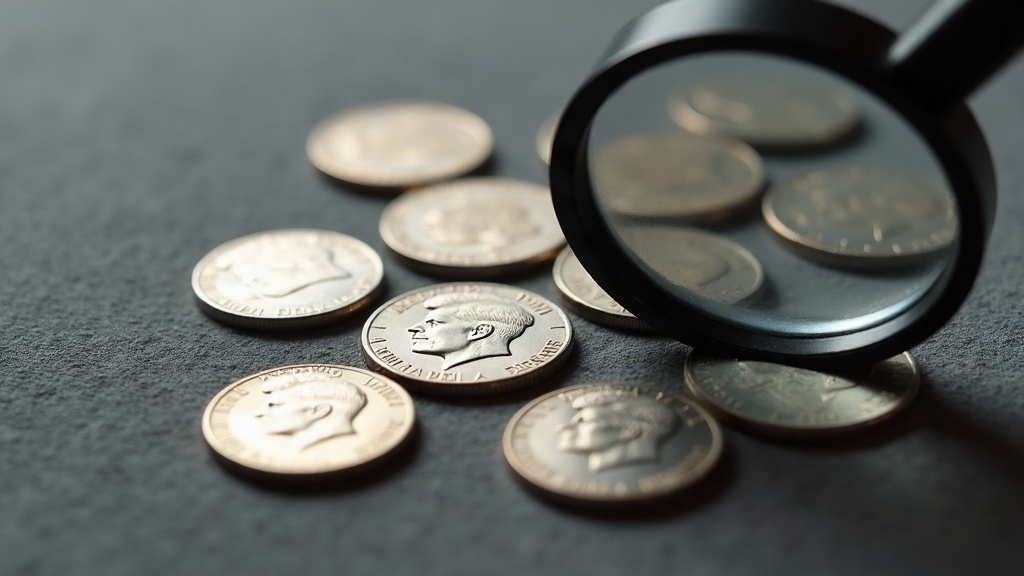
A Kennedy half dollar’s composition, and much of its value, depends almost entirely on its date. Coins struck in 1964 are 90% silver. Those from 1965 through 1970 are a 40% silver clad blend. Everything from 1971 onward is copper-nickel clad with no silver at all, worth face value unless it’s a specific proof or mint-mark rarity. Before assuming an old half dollar in a jar or drawer is worth much, check the date first.
A Coin Born From Tragedy
The Kennedy half dollar was rushed into production after President John F. Kennedy’s assassination in November 1963. Congress and the Treasury moved quickly to replace the Franklin half dollar with a memorial coin, and the U.S. Mint issued the new design in early 1964, just months after Kennedy’s death. Demand was immediate and enormous. People wanted to hold onto them rather than spend them, which is part of why so many 1964 halves survive today in good condition.
The design paired portraits of Kennedy on the obverse with a modified presidential seal and heraldic eagle on the reverse. You can read more about how the Mint has handled memorial and commemorative coinage over the decades on the U.S. Mint’s own history pages, which cover the broader arc of American coin production.
Who Designed It
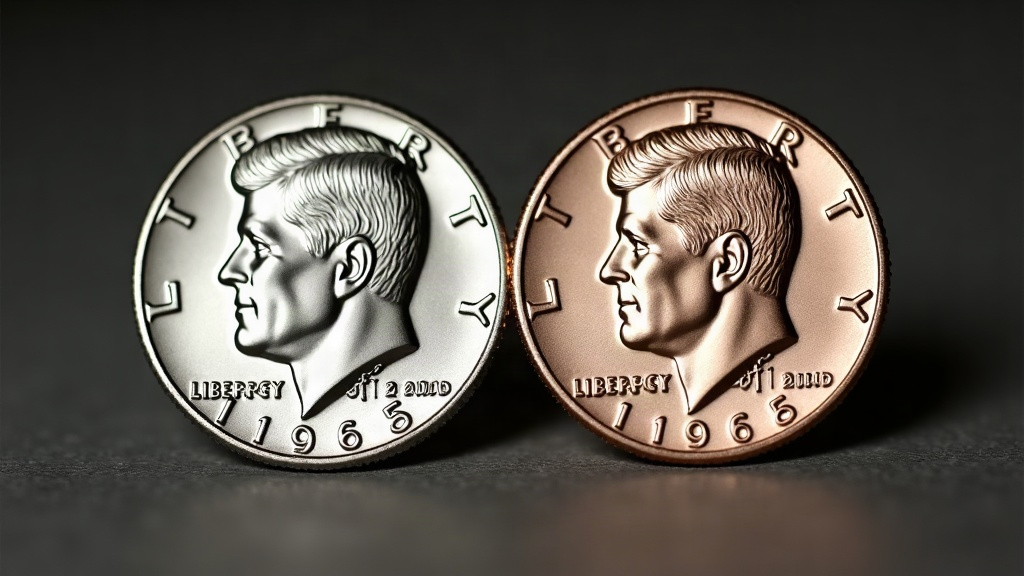
Chief engraver Gilroy Roberts created the obverse portrait, adapting work he had done for a Kennedy inaugural medal. Frank Gasparro, who later became chief engraver himself, designed the reverse. Both were career Mint engravers, not outside artists, and their initials appear small on the coin. The pairing of two in-house designers on a single coin was fairly typical for U.S. Mint practice at the time.
Check the Date First: A Composition Decision Rule
This is the part that actually matters if you’re holding a stack of these coins. Composition changed twice in the coin’s early years, and those changes are the single biggest driver of value for circulated Kennedy halves. Collector demand for specific dates or errors can add more, but composition sets the floor.
| Date range | Composition | Silver content | Fine silver in the coin |
|---|---|---|---|
| 1964 | 90% silver, 10% copper | Highest of any circulating Kennedy half | 0.3617 troy oz of fine silver (11.25 g of the coin’s 12.5 g) |
| 1965–1970 | 40% silver clad (silver outer layers over a copper core) | Less than half the silver of a 1964 coin | 0.1479 troy oz of fine silver (4.6 g of the coin’s 11.5 g) |
| 1971–present | Copper-nickel clad, no silver | None | Face value only, unless it’s a proof, special finish, or a documented rarity |
To value the silver in a coin, multiply its fine-silver content by a live silver price per troy ounce. We do not print a price here because it would be out of date within a day, and an earlier version of this table that did contain one also had its multiples wrong.
A quick visual check helps too. Silver-content halves (1964 and the 1965–1970 clad issues) tend to have a slightly different edge tone than the plain copper-nickel coins from 1971 onward, since the clad layers are silver rather than the copper-nickel sandwich used later. A jeweler’s loupe or a simple date check is usually enough to sort a jar of coins into these three buckets before you go any further.
Why the Composition Changed
By the early 1960s the silver in circulating coins had become too costly for the Mint to keep using, and people were already hoarding silver coins instead of spending them. The Coinage Act of 1965 phased silver out of dimes and quarters entirely and cut it to 40% in the half dollar, as a transition step. By 1971, half dollars dropped silver altogether and moved to the copper-nickel clad format still used today. This same pressure shaped junk silver coinage generally, not just the Kennedy half.
What Actually Makes a Kennedy Half Worth More Than Melt
For most Kennedy halves, silver content (or its absence) is the whole story. But a smaller number carry a premium above raw metal value because of condition, mint-mark rarity, or manufacturing errors. Proof and special mint set coins, low-mintage years, and doubled-die or off-center strikes can matter to collectors even when the coin’s silver content is modest or nonexistent. This is the difference between bullion value and numismatic value, and it’s worth understanding before you assume a coin’s age alone makes it special; our guide to how those two values differ goes into this in more depth.
If you think you might have something unusual, the Mint’s own reference materials and third-party grading resources can help confirm mint marks and strike types; general identification basics are covered in our coin collecting guide. Getting a coin professionally examined before selling, rather than guessing from a photo, is a reasonable step for anything you suspect is out of the ordinary.
Buying, Selling, and Avoiding Pressure
Kennedy halves are widely available and commonly sold as junk silver rolls, individual dates, or proof sets. Because silver content is easy to calculate and silver prices are public, this coin is also a common prop in high-pressure sales pitches that exaggerate rarity or urgency. Legitimate dealers explain composition and pricing plainly and don’t rush a decision; our overview of sales tactics worth watching for covers common red flags in more detail. A second opinion or independent appraisal is a reasonable step before any large purchase or sale, and our precious metals investing guide lays out general considerations for buying bullion-adjacent coins like these.
The Smithsonian’s National Numismatic Collection holds Kennedy-era coinage as part of its broader American coin history, a useful reminder that this is, first and foremost, a coin with a documented origin story rather than a mystery worth inflating; you can browse related material through the Smithsonian National Numismatic Collection. For the coin’s own official history and design credits, the U.S. Mint’s circulating coin design pages are a solid primary source.
What the statutes say about the silver
A 1964 Kennedy half dollar follows the standard that has governed U.S. silver coins since the Coinage Act of 1837 (.900 fine) and the Coinage Act of 1873 (12.5 grams for the half dollar). Nine tenths of 12.5 g is 11.25 g of silver, or 0.3617 troy ounce.
The 1965-1970 coin is defined in the Coinage Act of 1965: a diameter of 1.205 inches, outer layers of 800 parts silver to 200 parts copper, and a core of silver and copper such that the whole coin weighs 11.5 grams and contains 4.6 grams of silver. That is exactly 40% silver and 0.1479 troy ounce. The same Act allowed the Treasury to keep minting 900-fine half dollars, quarters and dimes for a transition period, and required that any such coin struck after the Act be inscribed 1964, which is why some 1964-dated coins were actually made after the Act passed. Coins from 1971 on follow the later statutory spec: copper-nickel outer layers over a copper core, 11.34 grams.
Turn these figures into a metal value at a price you type in yourself with the coin melt value calculator; every coin’s weight, fineness and source is in the coin content chart.
Gold Coins Today publishes general information about coin collecting and precious metals, not financial, investment, tax or legal advice. Articles on this site are drafted with AI assistance (see our editorial policy) and are not written or reviewed by certified numismatists, appraisers, financial advisors or dealers. Coin and bullion values change constantly and depend on condition, authenticity and the current market — get a current appraisal or spot price from a qualified, reputable source before buying or selling, and consult a licensed financial advisor before treating precious metals as part of an investment strategy.