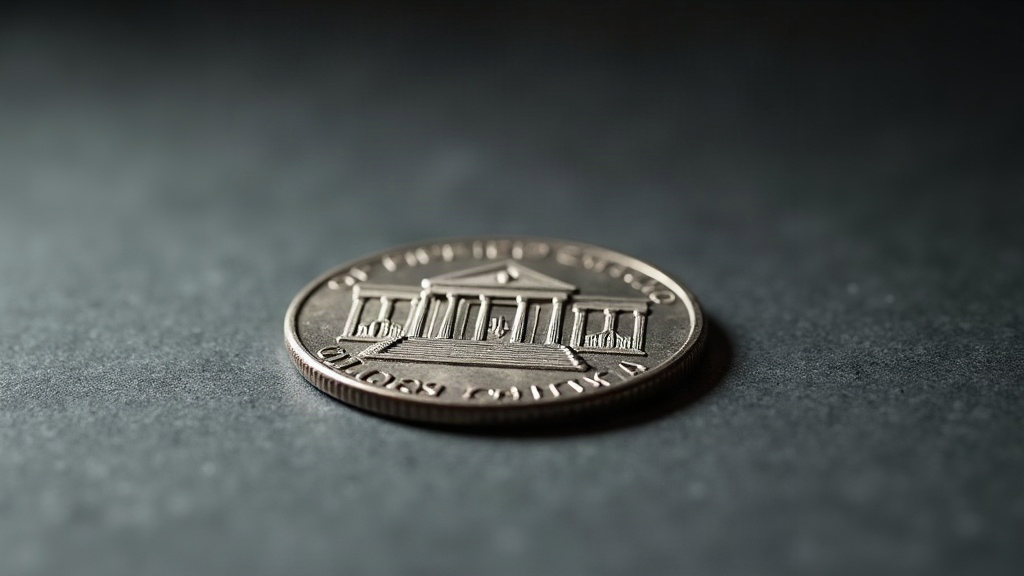
The Jefferson nickel has looked mostly the same since 1938, but its design history includes one major detour and a surprisingly technical detail that collectors care about a great deal: how cleanly the steps of Monticello were struck. Felix Schlag created the original obverse and reverse in a public design competition. The reverse briefly changed for the 2004-2006 Westward Journey series before Monticello returned. Within that history, the “Full Steps” designation separates ordinary circulated nickels from a smaller group that commands real collector attention, and it hinges on details most people never notice.
How Felix Schlag Won the Design
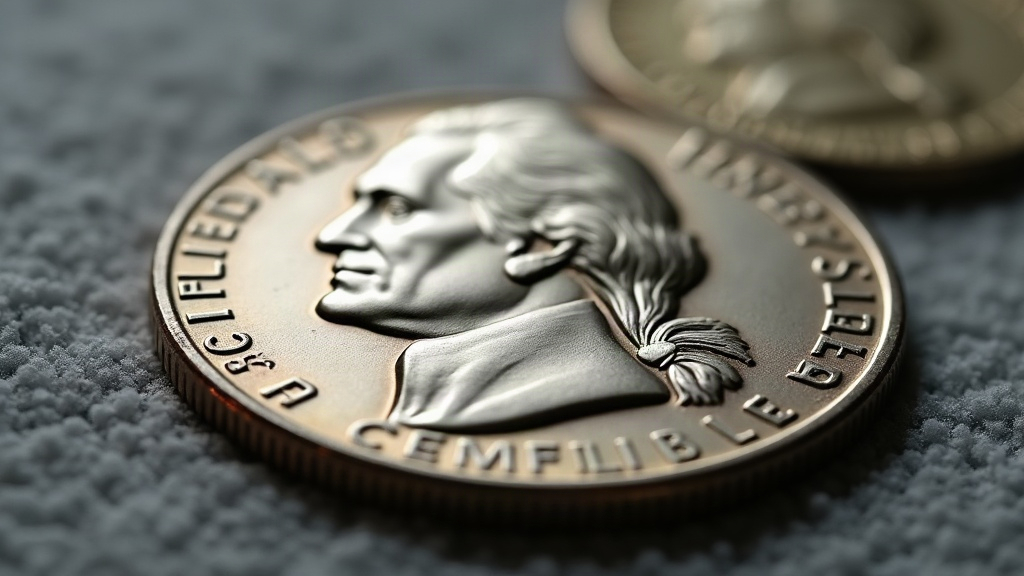
In 1938, the US Mint held an open competition to replace the Buffalo nickel. Felix Schlag, a commercial artist, submitted the winning entry. His obverse showed a left-facing portrait of Thomas Jefferson. The reverse depicted Monticello, Jefferson’s Virginia home, shown nearly straight-on with a row of small steps leading up to the entrance.
Those steps seem like a minor architectural detail. They turned out to matter enormously to later collectors. The steps required a specific depth of die engraving and enough striking pressure to fill the design fully. When mints struck coins quickly, at high volume, and with worn dies, the steps often came out soft and indistinct. That single design choice created a strike-quality marker collectors still chase today. You can read more about the Mint’s own account of the coin’s origin on the US Mint’s Jefferson nickel page.
For readers new to how US coin designs get approved and changed at all, the broader story sits within the history of the US Mint, which explains the institutional side of design competitions and production decisions.
The 2004-2006 Westward Journey Redesigns
Between 2004 and 2006, the Mint temporarily set aside the standard Monticello reverse. The Westward Journey series marked the bicentennial of the Lewis and Clark Expedition. New reverse designs included an American bison, a coastal view referencing “Ocean in View,” and other Western-themed imagery. The obverse also changed briefly, showing a new forward-facing Jefferson portrait starting in 2006.
By 2006, the Mint restored the familiar Monticello reverse, paired with the updated obverse portrait that remains in use today. So the modern Jefferson nickel is a hybrid: original Monticello reverse, but a newer obverse than Schlag’s 1938 version. Collectors sometimes overlook this detail, assuming the whole design has stayed untouched since the Depression era.
What “Full Steps” Actually Means
Grading services apply a “Full Steps” designation to certain Jefferson nickels when Monticello’s steps show complete, unbroken definition. This is separate from the coin’s numeric grade. Two nickels can share the same grade, say MS-65, but only one might carry the Full Steps label if its steps struck up cleanly.
The two major grading services use slightly different thresholds:
- PCGS Full Steps (FS): requires six fully struck, unbroken steps, with no interruptions from die scratches or striking weakness.
- NGC Full Steps (FS): uses a five-step standard, a somewhat less strict threshold than PCGS.
Because the standards differ, the same coin can sometimes qualify under one service’s criteria but not the other’s. Neither is “more correct.” They simply reflect separate internal grading systems. If you want a plain explanation of how services like these arrive at any designation, the site’s general piece on what grading services actually do covers the mechanics without steering you toward buying anything.
This distinction only matters because striking Monticello’s steps fully was hard. Mint presses in the mid-20th century often ran with worn dies, spaced too far apart, or at speeds that didn’t allow metal to fill the finer details. The result: many original-strike Jefferson nickels show mushy, incomplete steps even in otherwise high circulated or mint-state grades.
Years and Mints Known for Weak Strikes
Some dates are notorious among Jefferson nickel collectors for chronically soft strikes, which makes Full Steps examples from those years disproportionately scarce relative to how many coins were minted overall.
| Date/Mint | Why It’s Notable |
|---|---|
| 1939-D | An early Denver-mint date; well-struck steps exist but are far outnumbered by weak strikes, making Full Steps examples genuinely tough to find. |
| 1950-D | A famous low-mintage date already scarce in any condition; full step definition on top of that low mintage adds another layer of rarity. |
| 1954-S | High mintage overall, but San Francisco strikes from this era are frequently weak, so Full Steps survivors are a small fraction of the total. |
| Mid-1950s to early 1960s issues generally | Many dates from this stretch show chronic strike weakness tied to die spacing and production speed, not scarcity of the coin itself. |
Notice the pattern. Some of these dates aren’t rare in the raw sense; millions were struck. What’s scarce is the combination of full striking detail with the date and mint mark. That combination is what collectors pay attention to, not raw mintage numbers alone.
This is also why a general reference to mintage figures alone can be misleading. A coin’s true availability in a specific condition, like Full Steps, often diverges sharply from how many were originally produced. The site’s explanation of what makes a coin a “key date” goes into how scarcity and demand interact more broadly, and the same logic applies here even though Full Steps nickels aren’t always classic “key dates” in the traditional sense.
Why Strike Quality Varies So Much
Several practical factors affected how well steps struck up on any given nickel:
- Die spacing: Presses adjusted for speed sometimes ran with dies slightly farther apart than ideal, reducing metal flow into fine details.
- Die wear: As dies aged from repeated use, the fine step lines were among the first details to soften.
- Production pressure: During high-demand periods, Mint facilities prioritized volume, which could mean less careful die maintenance.
- Design geometry: The steps sit in a recessed, detailed part of the design, physically harder to fill with metal than broad, flat surfaces like Jefferson’s cheek or the building’s facade.
None of this is a flaw in the coin’s legitimacy. A softly struck 1954-S nickel is just as genuine as a Full Steps example. It simply reflects normal production variation, not damage or wear from circulation. This distinction matters if you’re trying to tell a naturally weak strike apart from a coin that’s been cleaned or altered, a topic covered in the site’s guide to how to tell if a coin has been cleaned.
How Full Steps Affects Collector Interest
Because Full Steps examples are harder to find for certain dates, they typically draw more attention from specialists who build sets around strike quality rather than just date and mint mark. This is a distinct branch of collecting from simply assembling one coin per year. It rewards patience and careful examination under magnification, since the difference between five and six clean steps can be subtle.
What actually determines any premium a Full Steps coin might carry comes down to the usual factors across numismatics: condition, verified authenticity, how many surviving examples meet the designation for that date, and current market demand among specialists. None of that is fixed or predictable, and it shifts with collector interest over time. For a broader look at how collectible value differs from simple metal content, see the site’s piece on numismatic value versus bullion value, which explains why two nickels made of the same metal can be regarded very differently by the market.
If you’re examining a Jefferson nickel and trying to judge strike quality yourself, a loupe and good lighting go a long way, and comparing against reference images from a grading service helps calibrate your eye. The NGC and PCGS websites both publish their own criteria and photo examples for Full Steps designations, which is a reasonable starting point before forming your own opinion.
Putting the Design History in Context
Step back, and the Jefferson nickel’s story is really two overlapping histories. One is the visible design timeline: Schlag’s 1938 original, the Westward Journey detour, and the return to Monticello with an updated obverse. The other is a quieter production history, told through die wear and striking pressure, that only shows up when you look closely at the steps on the reverse.
Both stories matter for different reasons. The design timeline explains what the coin looked like and why it changed. The strike-quality history explains why certain dates draw specialist interest even when they aren’t scarce by mintage alone. Understanding both gives you a fuller picture than either one on its own.
If Jefferson nickels have sparked a broader interest in identifying and building sets of US coinage, the site’s coin collecting guide is a reasonable next stop, covering identification basics, storage, and how collectors typically approach building a series. And if you’re weighing whether a particular coin’s value is primarily collectible or primarily tied to its metal content, the precious metals investing guide lays out that broader distinction without pushing you toward any purchase decision.
As with any purchase involving graded or designated coins, a second opinion or independent look before a significant purchase is a reasonable step, especially given how much subjective judgment goes into strike-quality calls. Legitimate dealers and grading services don’t need high-pressure tactics to make their case, and a coin’s Full Steps status is something you can verify yourself with patience rather than take on faith.
Gold Coins Today publishes general information about coin collecting and precious metals, not financial, investment, tax or legal advice. We are writers and editors, not certified numismatists, appraisers, financial advisors or dealers. Coin and bullion values change constantly and depend on condition, authenticity and the current market — get a current appraisal or spot price from a qualified, reputable source before buying or selling, and consult a licensed financial advisor before treating precious metals as part of an investment strategy.