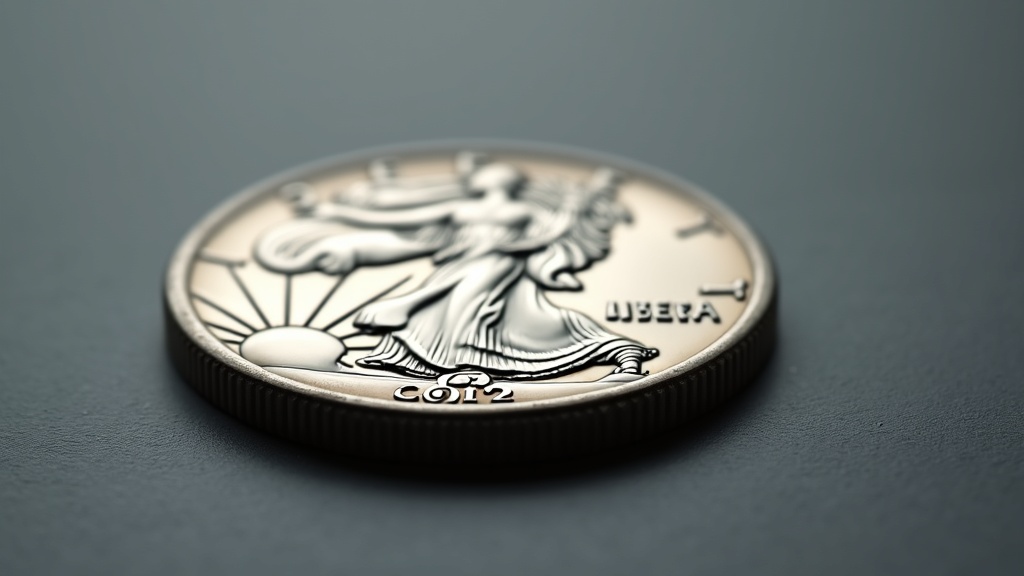
The Walking Liberty Half Dollar is a United States 50-cent coin minted from 1916 to 1947, prized by collectors for its design by sculptor Adolph A. Weinman depicting Liberty striding toward a rising sun. It was struck in 90% silver, making it both a numismatic collectible and a piece of silver bullion, and its value today depends on condition, date and mint mark rarity, and overall demand from collectors rather than any fixed number. Understanding how the series is organized helps explain why some dates are common pocket change while others are genuine key dates.
A brief history of the design
The Walking Liberty Half Dollar arrived in 1916 as part of a broader effort by the US Mint to modernize its silver coinage with more artistic designs, following similar redesigns of the dime and quarter around the same period. Adolph Weinman, a well-regarded sculptor of the era, created an obverse showing Liberty walking toward the sun with the American flag draped over her arm, and a reverse featuring a bald eagle perched on a mountain crag. The design is widely considered one of the most admired in American coinage, and it was later revived, in modified form, on the obverse of the American Silver Eagle bullion coin starting in 1986.
Production ran with some gaps, and mints in Philadelphia, Denver, and San Francisco all struck the series at various points, which is why mint marks matter so much to collectors trying to complete a set. If you’re new to reading these details, our guide on how to read the date and mint mark on a US coin walks through where to find that small letter and what it tells you about where a coin was struck.
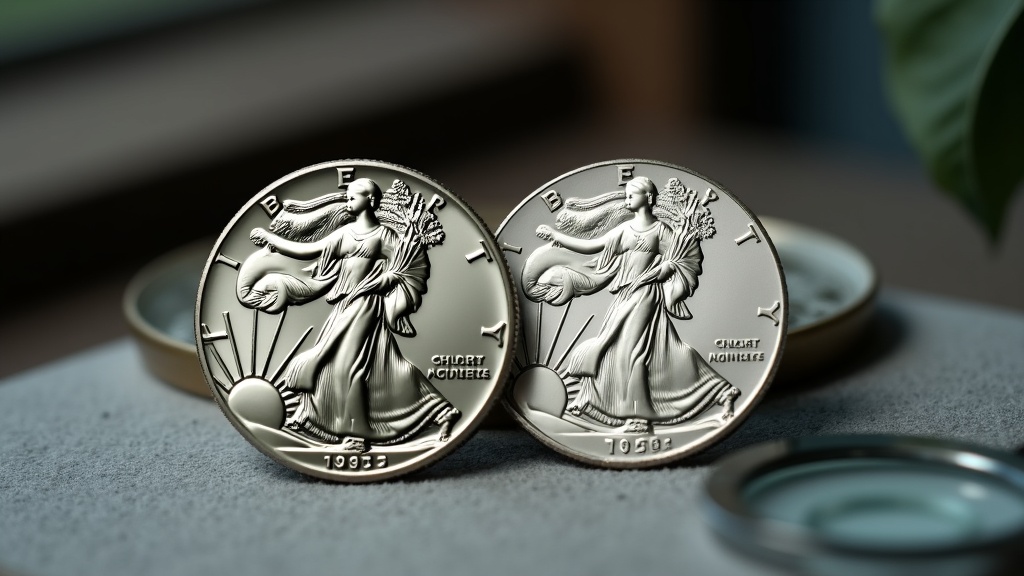
Design details worth knowing
On the obverse, Liberty is shown mid-stride, facing the sun, with rays extending outward. The reverse eagle stands on a rocky perch with a small sapling growing beside it, a detail sometimes interpreted as a nod to national resilience following World War I. Mint marks on early issues appear on the obverse near the rim; later issues moved the mint mark to the reverse. This kind of small design shift is common across US series and is one of the reasons collectors get comfortable with basic coin collecting terminology before trying to sort dates by eye.
Composition and specifications
Walking Liberty Half Dollars were struck in a standard 90% silver, 10% copper alloy, the same composition used across most US silver coinage of the era. That silver content is a factual specification, not a value statement — what a given coin is actually worth depends on its condition, whether it has any numismatic premium above its metal content, and current market conditions for silver, which change constantly. Anyone weighing a purchase or sale should check a live, reputable spot price rather than relying on a number printed somewhere online.
Key dates and relative scarcity
As with most long-running series, not every year and mint combination was produced in the same quantities. Some early dates from the late 1910s, along with a handful of Depression-era issues with lower mintages, are generally recognized by collectors as tougher to find in higher grades. Rather than memorizing invented figures, it’s more useful to understand the concept behind this: our explainer on what a key date coin is and why it matters covers how mintage numbers, survival rates, and collector demand combine to make certain dates disproportionately harder to locate, especially in better condition.
If you’re trying to figure out where a specific coin in your collection might fall on that spectrum, checking third-party population data can help contextualize how many examples of a given date and grade have been certified. Our page on how coin population reports work explains what these reports can and can’t tell you, since population data reflects submissions to grading services, not the total number of coins that exist.
Grading and condition
Because Walking Liberty Half Dollars saw heavy circulation for decades, well-worn examples are common, while coins that survived in higher uncirculated grades are comparatively scarce and more sought after. Grading terminology can look intimidating at first, but it follows a consistent logic. Our guides on what coin grading actually means and the Sheldon coin grading scale explain the numerical scale graders use, while the article on MS versus AU versus XF grade abbreviations breaks down what those specific letter codes signify for a coin’s surface wear and detail.
One detail specific to this series: because Liberty’s head and the eagle’s breast are high points that wear down first, minor differences in strike quality and handling can make grading distinctions on this coin more nuanced than on some other series. If you’re ever unsure whether a coin has been cleaned, which can significantly affect how it’s regarded by collectors, our guide on how to tell if a coin has been cleaned outlines the visual signs to look for, such as unnatural shine or hairline scratches following the coin’s design lines.
Proof issues
Alongside regular circulation strikes, the Mint also produced proof versions of the Walking Liberty Half Dollar in certain years, primarily aimed at collectors rather than everyday commerce. Proofs are struck differently, typically with polished dies and multiple strikes, resulting in sharper detail and a distinct finish. If you come across the term and aren’t sure how it differs from an ordinary coin, our article on proof coins versus business strikes lays out the practical differences in how each is made and typically valued by collectors.
Errors and varieties
Like many mid-20th-century series, Walking Liberty Half Dollars occasionally turn up with minor die varieties or, less commonly, mint errors. These range from small doubling on design elements to more dramatic striking mistakes. If a coin in your collection looks slightly “off” compared to a typical example, it’s worth learning the difference between a genuine error and ordinary wear or damage. Our overviews of coin error types and what coin varieties are explain how numismatists distinguish intentional design changes from unintentional minting mistakes, and why some of these anomalies carry meaningful premiums among specialized collectors while others don’t.
Starting or expanding a collection
Many collectors are drawn to the Walking Liberty series because it’s finite — running for a defined stretch of years — which makes assembling a full date-and-mint set an achievable long-term goal for a patient collector. If you’re just getting oriented in the hobby generally, our guide on how to start a coin collection from scratch and our rundown of common coin collecting mistakes beginners make are both useful starting points before you commit meaningfully to any one series. Storage matters too: silver coins can tone or develop surface issues depending on how they’re housed, so it’s worth reading our comparison of coin albums, folders, and holders before deciding how to store pieces you intend to keep long-term.
For any coin you’re seriously considering purchasing, particularly one advertised as rare or a key date, a second opinion from an independent, reputable source is a reasonable step before spending significant money. Legitimate dealers and grading services do not rely on high-pressure sales tactics or urgency (“buy before the price goes up”) to move product, and a coin’s authenticity or grade can often be confirmed through third-party grading services rather than taking a seller’s word alone. Our explainer on what grading services actually do describes what that certification process does and doesn’t guarantee.
Frequently asked questions about the Walking Liberty Half Dollar
What years did they make Walking Liberty Half Dollars?
The series was struck from 1916 through 1947, with some gap years where production paused, before the design was replaced in 1948 by the Franklin Half Dollar. Mint marks from Philadelphia, Denver, and San Francisco all appear across the run.
Are Walking Liberty Half Dollars real silver?
Yes, they were struck in the standard 90% silver, 10% copper alloy used for US silver coinage of that period. The exact metal content is a fixed technical specification, though what a specific coin is worth depends on its condition and current market conditions.
How can I tell what my Walking Liberty Half Dollar is worth?
Value depends on the date, mint mark, condition or grade, and current demand among collectors, along with the coin’s silver content relative to live spot pricing. Because these factors shift, getting a current appraisal from a knowledgeable, reputable source is more reliable than any figure printed online.
What is the rarest Walking Liberty Half Dollar?
Certain early dates and specific mint combinations are generally recognized as tougher to find, especially in higher uncirculated grades, due to lower original mintages and fewer surviving examples. Checking population reports and grading references can offer more context than relying on general reputation alone.
How do I know if my Walking Liberty Half Dollar has been cleaned?
Cleaned coins often show an unnatural, overly bright surface, fine hairline scratches following the design’s contours, or a lack of natural luster patterns. These signs can affect how the coin is regarded by collectors and graders, so comparing it against known genuine, uncleaned examples is a useful first step.
Gold Coins Today publishes general information about coin collecting and precious metals, not financial, investment, tax or legal advice. We are writers and editors, not certified numismatists, appraisers, financial advisors or dealers. Coin and bullion values change constantly and depend on condition, authenticity and the current market — get a current appraisal or spot price from a qualified, reputable source before buying or selling, and consult a licensed financial advisor before treating precious metals as part of an investment strategy.
Related reading
The History of the Morgan Silver Dollar, Common Coin Collecting Mistakes Beginners Make, Coin Album vs Coin Folder vs Coin Holders.