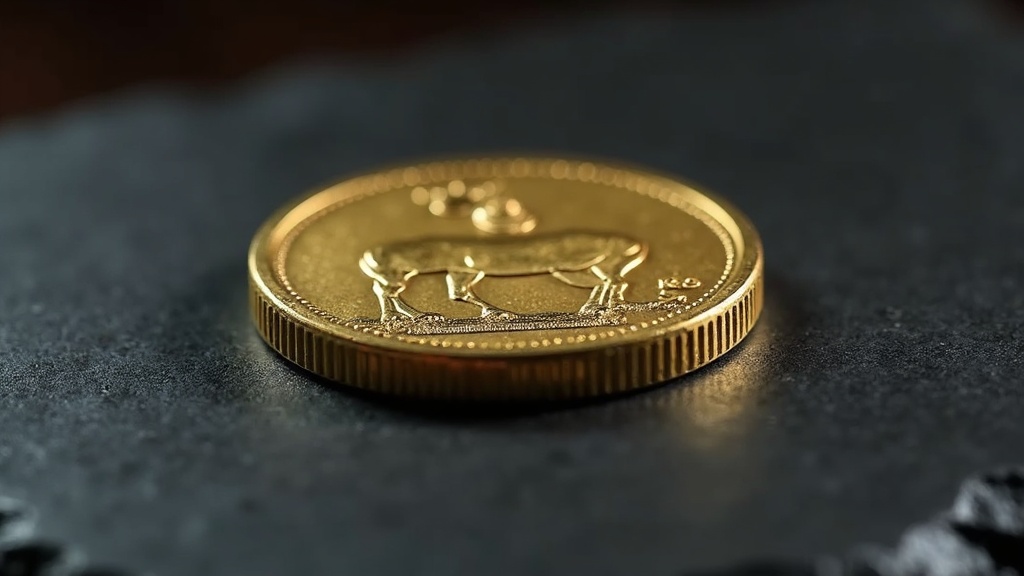
The Krugerrand is a gold bullion coin first issued by South Africa in 1967, created to give ordinary buyers an easy way to own gold in a set, verifiable weight. Its design pairs a portrait of Boer statesman Paul Kruger on the obverse with a leaping springbok antelope on the reverse, and it became the model that later gold bullion programs around the world would follow. Unlike many government coins, it was never intended to circulate as everyday money — it was built purely as a way to trade gold conveniently.
Where the Krugerrand came from
By the mid-20th century, South Africa was among the world’s largest gold producers, and the South African Mint and the Rand Refinery worked with the country’s Chamber of Mines to develop a coin that would make gold ownership simple for private individuals rather than only central banks. Before the Krugerrand, most gold coins in wide circulation were older historical issues — pieces like the British sovereign, discussed in our guide to British sovereign gold coins, had been struck for commerce and empire, not as a modern bullion product. The Krugerrand’s innovation was treating gold itself, in a known and trusted weight, as the product.
It launched in 1967 and steadily gained international acceptance through the 1970s, helped by the fact that private gold ownership had been restricted or tightly regulated in a number of countries for decades. As those restrictions eased, notably in the United States by the mid-1970s, the Krugerrand found a ready audience of buyers who wanted a straightforward, widely recognized way to hold physical gold. For a period, it was reportedly the dominant gold bullion coin in global trade, though exact production and sales figures from that era vary by source and are best treated as general history rather than precise statistics.
Political developments later complicated its story. During the 1980s, some countries imposed import restrictions on the Krugerrand in connection with sanctions against South Africa’s government at the time. Production and international demand were affected during that period, and the coin’s history reflects broader geopolitical currents as much as it does numismatics. Krugerrand production continued domestically, and the coin regained wider international acceptance in subsequent decades.
The design: Paul Kruger and the springbok
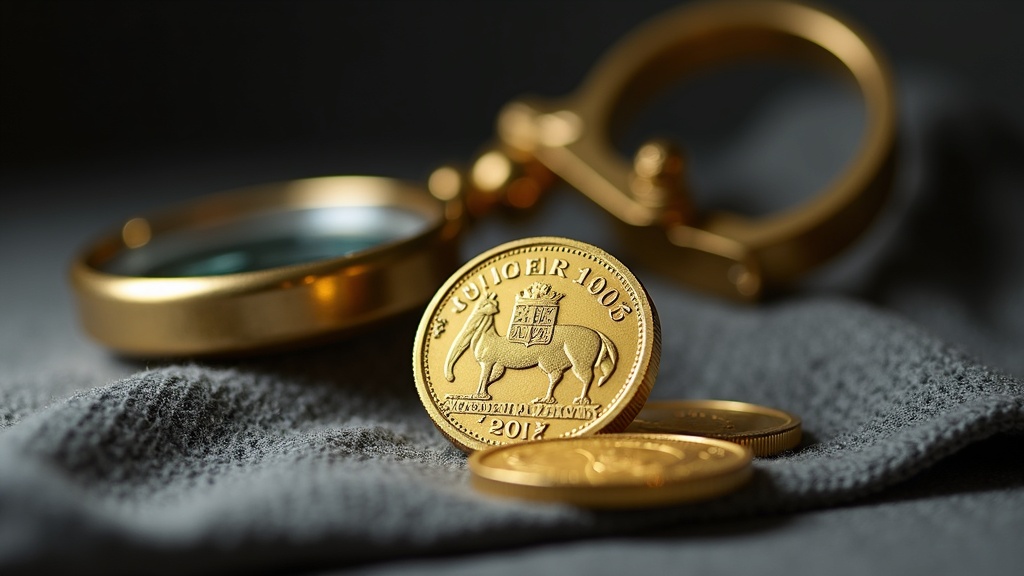
The obverse of the Krugerrand shows a portrait of Paul Kruger, who served as president of the South African Republic (Transvaal) in the late 19th century. The image was adapted from an earlier design used on historical South African coinage, tying the modern bullion coin to the country’s numismatic past rather than inventing an entirely new motif.
The reverse features a springbok, a species of antelope that is a national symbol of South Africa, shown in a running or leaping pose. The springbok design was created by South African artist Coert Steynberg, and it has remained the coin’s reverse image since the program began, giving the Krugerrand a consistent, recognizable look across decades of production. This kind of stable, unchanging design is one reason bullion coins in general are easy to identify at a glance — a contrast with many historic circulating series, where mint marks, minor design tweaks, or short-lived types create the kind of variety collectors explore in guides like our overview of coin error types or coin varieties.
Weight, purity, and available sizes
A standard Krugerrand contains one troy ounce of pure gold, but because pure gold is soft, the coin is alloyed with copper to improve durability, giving it a distinctive reddish-gold tone compared to coins struck in .999 fine gold. This 22-karat standard (91.7% gold) is the same approach used in some other historic gold coinage, including the British sovereign. Because copper is added, the coin’s total weight is slightly higher than one pure troy ounce of gold, a detail worth understanding before comparing coins of different purities by weight alone.
Over time, the Krugerrand program expanded beyond the original one-ounce coin to include fractional sizes — commonly half-ounce, quarter-ounce, and tenth-ounce versions — giving buyers a range of gold weights to choose from. Proof versions have also been struck for collectors, distinct from the standard bullion strikes made for general circulation in the gold trade. The difference between a proof finish and a standard business-strike finish is explained in more general terms in our piece on proof coins versus business strikes, and the same underlying concepts apply to the Krugerrand’s collector editions.
How the Krugerrand compares to other gold bullion coins
The Krugerrand’s success encouraged other nations to develop their own gold bullion programs, each with different purity standards, design philosophies, and national symbolism. The table below offers a general comparison; readers wanting more detail on any individual coin can follow the links to our dedicated guides.
| Coin | Typical purity | Design theme |
|---|---|---|
| Krugerrand | 22K (91.7% gold, copper alloy) | Paul Kruger portrait / springbok |
| American Gold Eagle | 22K (91.7% gold, copper/silver alloy) | Liberty design / eagle family |
| Canadian Gold Maple Leaf | .9999 fine gold | Queen or King portrait / maple leaf |
| British Sovereign | 22K (91.7% gold) | Monarch portrait / Saint George and the dragon |
Readers interested in how these other national programs developed can find more background in our history of the American Gold Eagle and our guide to the Canadian Maple Leaf. Each program reflects its own country’s minting traditions, and the alloy choices affect not just color and hardness but also how the coin’s total weight relates to its pure gold content — a distinction worth understanding rather than assuming all gold coins are struck to the same standard.
What determines a Krugerrand’s value
Like any gold bullion coin, what a Krugerrand is worth at a given moment depends primarily on the current spot price of gold, the coin’s actual gold content and condition, and, for collector or proof versions, factors like rarity and demand among collectors. Because gold spot prices move throughout each trading day, this article won’t state a figure — anyone weighing a purchase or sale should check a live spot price from a reputable financial or bullion-market source and, for anything beyond a routine bullion transaction, consider an independent appraisal.
This is also a market where high-pressure sales tactics show up more often than in most areas of coin collecting — particularly around gold IRA pitches and “the dollar is collapsing” style urgency. A legitimate dealer will give you time to think, will not pressure same-day decisions, and won’t discourage you from getting a second opinion. If you’re new to handling and storing bullion coins generally, our broader collecting resources, including the coin basics and identification section, are a reasonable starting point before making any purchase.
For readers whose interest in the Krugerrand comes from a broader curiosity about world coinage and monetary history rather than bullion buying specifically, our world and ancient coins archive covers other national coin traditions, and our US coins and history section offers a parallel look at how American coinage evolved over a similar span of time.
Frequently asked questions about the Krugerrand
Is the Krugerrand pure gold?
No. A standard Krugerrand is 22-karat gold, meaning it is 91.7% gold alloyed with copper for durability. This is different from some other bullion coins struck in .9999 fine gold, so total coin weight and pure gold content are not identical figures.
Why does the Krugerrand look reddish or orange compared to other gold coins?
The copper alloy used to harden the gold gives the Krugerrand its characteristic warmer, reddish-gold tone. Coins struck in higher-purity gold with little or no copper tend to look paler and more yellow by comparison.
What does the springbok on the Krugerrand represent?
The springbok is a species of antelope and a long-standing national symbol of South Africa. The design, created by artist Coert Steynberg, has appeared on the coin’s reverse since the Krugerrand program began in 1967.
Why was the Krugerrand banned or restricted in some countries?
During part of the 1980s, several countries placed import restrictions on the Krugerrand tied to broader political sanctions against South Africa’s government at the time. These restrictions affected international trade of the coin for a period and were separate from any issue with the coin’s gold content or authenticity.
How can I tell if a Krugerrand is genuine?
Genuine Krugerrands have consistent weight, dimensions, and design details that can be checked against official specifications, and a jeweler’s loupe can help examine strike quality and surface details. For anything beyond a casual check, a qualified appraiser or a reputable third-party grading service is the more reliable way to confirm authenticity.
Gold Coins Today publishes general information about coin collecting and precious metals, not financial, investment, tax or legal advice. We are writers and editors, not certified numismatists, appraisers, financial advisors or dealers. Coin and bullion values change constantly and depend on condition, authenticity and the current market — get a current appraisal or spot price from a qualified, reputable source before buying or selling, and consult a licensed financial advisor before treating precious metals as part of an investment strategy.