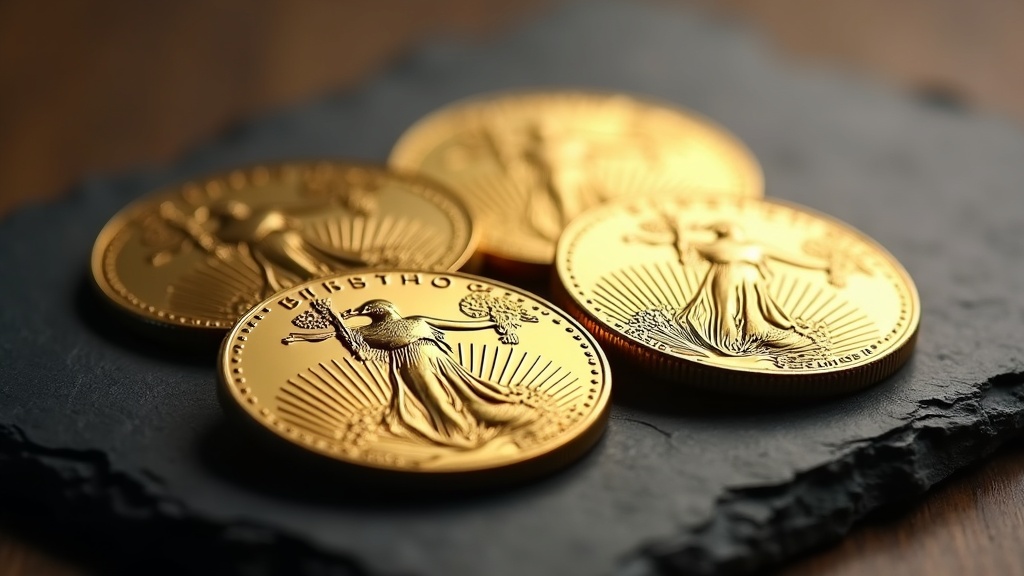
The American Gold Eagle is the United States Mint’s official gold bullion coin, first issued in 1986 under the Gold Bullion Coin Act of 1985. It is struck in four weights, made from a 22-karat gold alloy (91.7% pure gold, with silver and copper added for durability), and carries a nominal face value that is far below its actual gold content’s worth. It comes in both standard bullion and specially finished proof and uncirculated versions sold directly by the Mint.
How the Gold Eagle came to be
Before 1986, American investors and collectors who wanted government-issued gold coinage largely had to look abroad, since the United States had not minted a gold coin for general circulation since the 1930s. The Gold Bullion Coin Act changed that, authorizing the Mint to produce gold coins in four denominations backed by the government’s guarantee of weight and purity. The design chosen for the obverse was not new — it reused Augustus Saint-Gaudens’ walking Liberty image from the earlier double eagle, a design already celebrated among collectors. Readers interested in that earlier coin’s own story can find more detail in The Story Behind the Saint-Gaudens Double Eagle.
The reverse, created by sculptor Miley Busiek, shows a family of eagles — a male eagle carrying an olive branch flying above a nest with a female eagle and hatchlings — a design distinct from the classic heraldic eagle used on many older US coins. This pairing of a historic obverse with a purpose-built reverse gave the Gold Eagle its own identity while still connecting it to earlier American coinage traditions, a theme explored more broadly in the site’s US Coins & History section.
Specifications at a glance
The Gold Eagle is produced in four sizes, each with its own face value, weight, and diameter. The face values are symbolic — set by law rather than tied to the coin’s actual gold content — since the coins are valued in the marketplace according to their gold weight and current market conditions rather than the number stamped on them.
| Denomination | Gold content | Total weight | Diameter |
|---|---|---|---|
| $50 (1 oz) | 1 troy ounce | 1.0909 oz | 32.7 mm |
| $25 (1/2 oz) | 1/2 troy ounce | 0.5455 oz | 27.0 mm |
| $10 (1/4 oz) | 1/4 troy ounce | 0.2727 oz | 22.0 mm |
| $5 (1/10 oz) | 1/10 troy ounce | 0.1091 oz | 16.5 mm |
The alloy is 91.7% gold (22 karat), with the remainder made up of silver and copper. The copper gives the coin added hardness compared to pure 24-karat gold, which is soft and prone to marking, while the specific mix of silver and copper also produces the coin’s characteristic warm color. Because the coins contain slightly more than their stated troy-ounce weight in total mass — the extra portion being the alloying metals — the pure gold content per coin still matches the ounce or fractional-ounce figure printed on the coin.
Design details and how to read them
The obverse shows Liberty striding forward, torch in one hand and an olive branch in the other, with the Capitol building in the background — the same central image used on the 1907–1933 double eagle. The reverse eagle-family design has remained the Gold Eagle’s signature since 1986, distinguishing it from the Mint’s other bullion products. Coins carry the date, a mint mark when applicable, and the coin’s weight and face value struck directly into the design. Learning to locate and interpret these marks is a useful general skill for any collector, and the site’s guide on how to read the date and mint mark on a US coin walks through the basics that apply across most series, including this one.
Since the program began, the Mint has occasionally updated fine design elements or added privy marks for anniversary issues, but the overall obverse and reverse concept has stayed consistent, which is part of why the coin is easy to recognize at a glance compared to series that changed designs more frequently.
Bullion strikes versus proof and special finishes
Most Gold Eagles in circulation among collectors and stackers are standard bullion strikes, intended primarily for their gold content rather than collectible finish. The Mint also produces proof versions, struck with polished dies and specially prepared planchets for a sharper, mirror-like finish, along with occasional uncirculated collector versions carrying distinct mint marks. These are sold directly to collectors rather than through the bullion distribution channel used for standard strikes. The general distinction between these production methods — and why it matters for how a coin looks and is often described — is covered in more depth in Proof Coins vs Business Strikes: What’s the Difference?, which applies the same basic logic across many US coin series.
Because proof and special-finish Gold Eagles are produced in smaller numbers and sold through a different process than standard bullion coins, they’re often approached differently by collectors than by people primarily interested in the metal content itself. Neither approach is inherently right or wrong — it depends on what the buyer is trying to accomplish, whether that’s building a set, holding metal, or both.
How the Gold Eagle fits alongside other US bullion coins
The Gold Eagle was followed a few years later by the American Silver Eagle, which uses a similar concept — a historic obverse design paired with a modern reverse — applied to silver bullion instead. Readers comparing the two programs may find it useful to read Understanding the American Silver Eagle Bullion Coin alongside this article, since the Mint’s general approach to weight guarantees, authorized purity, and design philosophy carries across both series even though the metals and market dynamics differ.
For anyone newer to the hobby or the bullion side of collecting, it also helps to get comfortable with the vocabulary used around grading, condition, and authenticity before making any purchase. The Beginner’s Guide to Coin Collecting Terminology and the broader Coin Basics & Identification archive are good starting points for that groundwork.
What to keep in mind before buying
Gold Eagle values in the marketplace track the current price of gold plus a premium that reflects factors like the coin’s condition, whether it’s a bullion or proof strike, its mintage, and general demand at the time. Rather than quoting a specific figure here — which would be outdated almost immediately — it’s more useful to check a live spot price from a reputable source and compare it against a current dealer quote before deciding anything. If a coin has been graded and encapsulated by a third-party service, understanding what that process actually verifies is worthwhile background; see What Does Coin Grading Actually Mean? for a general explanation.
This corner of the hobby also attracts high-pressure sales tactics, particularly around retirement accounts and “the dollar is collapsing” style pitches. A legitimate dealer will give you time to think, will not rush a decision, and won’t discourage you from getting a second opinion. Before any large purchase, it’s reasonable to pause, verify current pricing independently, and consider an independent appraisal if you have any doubt about what you’re being offered.
Frequently asked questions about the American Gold Eagle
What year did the American Gold Eagle first come out?
The US Mint began striking the American Gold Eagle in 1986, following passage of the Gold Bullion Coin Act of 1985, which authorized an official American gold bullion coin backed by the government’s guarantee of weight and purity.
Is the American Gold Eagle pure gold?
No — it’s 22-karat gold, meaning 91.7% pure gold alloyed with silver and copper for added hardness. The pure gold content still equals the stated troy-ounce weight; the alloy just adds durability compared to a softer 24-karat coin.
What sizes does the American Gold Eagle come in?
It’s produced in four sizes: 1 ounce, 1/2 ounce, 1/4 ounce, and 1/10 ounce of gold content, each with its own face value, diameter, and total weight, as detailed in the specifications table above.
What’s the difference between a bullion and proof Gold Eagle?
Bullion strikes are standard coins distributed mainly for their gold content, while proof versions are struck with polished dies on specially prepared planchets for a sharper finish and sold directly to collectors, generally in smaller numbers than bullion strikes.
How can I check what a Gold Eagle is currently worth?
Because gold prices change constantly, check a live spot price from a reputable source and compare it with quotes from more than one dealer, factoring in the coin’s condition and any premium for proof or collectible versions, rather than relying on a fixed figure.
Gold Coins Today publishes general information about coin collecting and precious metals, not financial, investment, tax or legal advice. We are writers and editors, not certified numismatists, appraisers, financial advisors or dealers. Coin and bullion values change constantly and depend on condition, authenticity and the current market — get a current appraisal or spot price from a qualified, reputable source before buying or selling, and consult a licensed financial advisor before treating precious metals as part of an investment strategy.