
Coin collecting has its own vocabulary, and a handful of unfamiliar words can make even a simple auction listing or dealer conversation confusing. This guide walks through the core terms beginners run into most often — grading shorthand, physical coin parts, condition issues, and marketplace jargon — so you can read a listing or talk to a dealer with confidence. None of these terms require special equipment to understand, just a little context.
Why terminology trips up beginners
Numismatics (the formal study and collecting of coins, paper money, and related objects) developed its own shorthand over more than a century of organized collecting. Grading services, auction houses, and hobbyist forums all lean on abbreviations and technical terms that look intimidating at first but usually describe something fairly straightforward once translated. Understanding these terms also matters for a practical reason: sellers using pressure tactics or vague, dramatic language sometimes count on buyers not knowing basic terminology. Learning the vocabulary is one of the simplest ways to protect yourself when evaluating any claim about a coin.
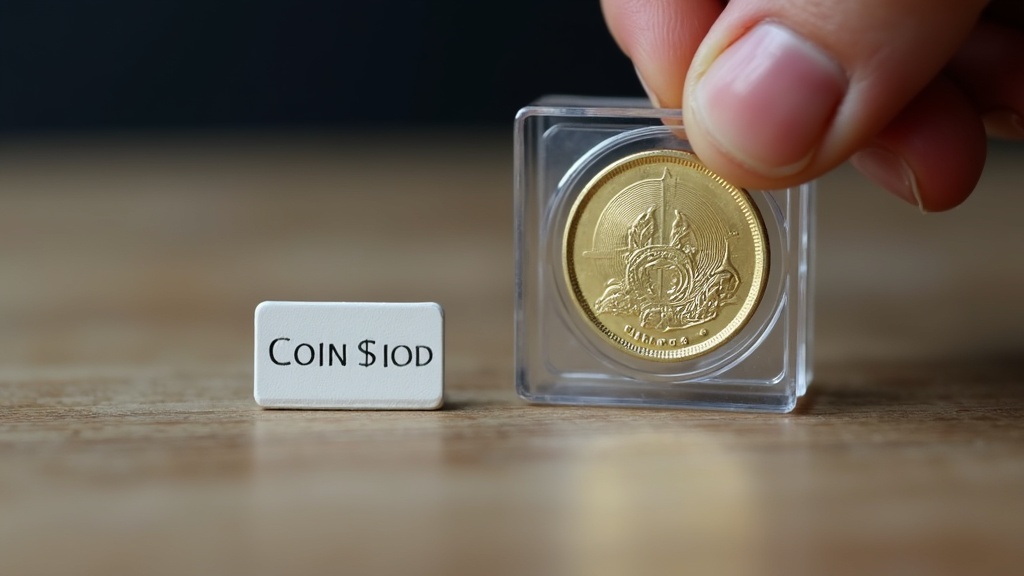
Parts of a coin
Before grading or pricing terms make sense, it helps to know the anatomy of a coin itself.
- Obverse — the “heads” side, typically featuring a portrait or primary design.
- Reverse — the “tails” side, often showing a secondary design like a building, animal, or denomination.
- Legend — the lettering on a coin, such as the country name or motto.
- Field — the flat background area of a coin’s surface, away from the design and lettering.
- Rim — the raised edge running around the coin’s border, which helps protect the design from wear.
- Mint mark — a small letter indicating which mint facility struck the coin. Learning to locate and read this, along with the date, is covered in more detail in our guide on how to read the date and mint mark on a US coin.
Grading and condition terms
Grading is the process of evaluating a coin’s condition and assigning it a standardized description. The concept itself — what grading actually means and why collectors rely on it — is worth understanding on its own, and our article on what coin grading actually means covers the fundamentals in depth. A few terms come up constantly:
- Grade — a shorthand rating of a coin’s condition, from heavily worn to essentially flawless.
- Circulated vs. uncirculated — whether a coin shows signs of having passed through everyday commerce (wear, dulled details) or still displays the sharpness of a coin that never entered circulation.
- Luster — the natural sheen on a coin’s surface produced by the minting process, which tends to diminish with handling and wear.
- Toning — a color change on a coin’s surface caused by natural oxidation over time; toning can be even and attractive or splotchy, and collectors have varying preferences.
- Eye appeal — a subjective term for how attractive a coin looks overall, beyond just its technical grade.
Grading abbreviations like MS, AU, and XF appear on nearly every graded coin’s label. If you’ve seen these letters and wondered what they mean, our explainer on MS vs AU vs XF grade abbreviations breaks down each tier. Many collectors also encounter the numeric scale that pairs with these letters, described in our overview of the Sheldon coin grading scale.
Cleaned, damaged, and altered coins
Not every condition issue is about wear. Coins can also be cleaned (had their natural surface stripped or altered by polishing or chemicals), which generally reduces both grade and appeal to collectors even if the coin looks shinier. Recognizing the signs of a cleaned coin is a skill in itself, and our guide on how to tell if a coin has been cleaned walks through common indicators. Related terms include damaged (scratches, dents, or corrosion) and altered (a coin that has been deliberately modified, such as an added mint mark), both of which typically affect how a coin is graded or whether it can be graded at all.
Grading services and slabs
Beginners often see coins described as “slabbed” or hear about third-party grading. A slab is the hard plastic holder a professional grading service seals a coin inside after assigning it a grade. Third-party grading refers to having an independent service — separate from the buyer and seller — examine, authenticate, and grade a coin. Our article on what grading services actually do explains this process step by step, including what a service does and doesn’t verify.
Two related terms:
- Certification number — a unique number assigned to a slabbed coin, often used to look up its grading details.
- Population report — a running count published by a grading service showing how many coins of a given date, mint, and grade have been certified. These reports are a tool for understanding relative scarcity within a series, not a guarantee of value, as explained in our piece on how coin population reports work.
Rarity and demand terms
Some of the most misused terms in the hobby relate to rarity, since dramatic language sells better than careful description. A few worth knowing precisely:
- Key date — a date-and-mint combination within a series that was produced in noticeably lower numbers or has otherwise become harder to find in nice condition, making it especially sought after by collectors completing a set. See our explanation of what a key date coin is and why it matters for more detail.
- Semi-key date — a date that’s somewhat scarcer than common dates in a series but not as difficult to find as a true key date.
- Mintage — the number of coins struck of a particular date and mint mark, one factor (among several) that can influence how available a coin is.
- Type coin — an example collected to represent a design or series as a whole, rather than a specific date.
Varieties and errors
Two terms that beginners frequently confuse are “variety” and “error.” A variety is a recognized, repeatable difference in a coin’s design or die that occurred during production — something intentional or systematic enough to be cataloged and collected, as explained in our guide to what coin varieties are and why they matter. An error is an unintentional mint mistake, such as a doubled die, off-center strike, or planchet defect. Our article on coin error types, including doubled dies, covers the main categories collectors look for.
Minting and manufacturing terms
- Planchet — the blank metal disc before it’s struck with a design.
- Die — the engraved metal tool used to stamp a design onto a planchet.
- Strike — the act of stamping a design onto a planchet, and also used to describe how sharply a design came through (a “weak strike” vs. a “full strike”).
- Proof — a coin struck using a special process (often polished dies and planchets, sometimes multiple strikes) intended to produce a highly detailed, mirror-like finish, generally intended for collectors rather than circulation.
- Business strike — an ordinary coin produced for general circulation, using standard dies and a single strike. The distinction between the two is explored fully in our comparison of proof coins vs. business strikes.
Bullion and precious metals terms
Collectors who also hold precious metals encounter a separate but overlapping vocabulary:
- Fineness — the purity of a precious metal, usually expressed as a decimal (like .999 fine silver) or a percentage.
- Karat (K) — a measure of gold purity out of 24 parts; for example, 22K gold is 91.7% pure gold.
- Bullion coin — a coin whose value is based primarily on its precious metal content rather than its rarity or collector demand, though some bullion coins are also collected for their design or limited mintage.
- Junk silver — a hobby term for common circulated coins (like pre-1965 US dimes and quarters) made of 90% silver, valued for their metal content rather than numismatic rarity.
- Spot price — the current market price for immediate delivery of a precious metal, which fluctuates constantly and should be checked from a live, reputable source rather than relied on as a fixed number.
If you’re ever approached with urgency about “acting now” on bullion or coins because of dramatic economic predictions, it’s worth remembering that reputable dealers generally don’t rely on high-pressure sales tactics, and getting a second opinion or independent appraisal before a large purchase is a reasonable, ordinary step — not a sign of distrust.
Where to go from here
Terminology is easiest to absorb gradually, by reading listings, handling coins, and revisiting terms as they come up. Our Coin Basics & Identification hub brings together foundational articles on grading, identification, and coin anatomy in one place if you want to keep building from here. National organizations such as the American Numismatic Association and reference sites maintained by major grading services also publish glossaries that can serve as a second reference point.
Frequently asked questions about coin collecting terminology
What does “MS” mean on a coin?
MS stands for “Mint State,” a grading term used for uncirculated coins that never entered everyday commerce. It’s typically followed by a number from 60 to 70 indicating the coin’s condition within that uncirculated range, with higher numbers reflecting fewer marks and better strike quality.
What’s the difference between a coin variety and a coin error?
A variety is a recognized, repeatable design or die difference that’s been cataloged and is intentionally collected, while an error is an unintentional mint mistake like a doubled die or off-center strike. Both can add collector interest, but they’re classified differently.
What does “slabbed” mean for a coin?
A slabbed coin has been examined by a third-party grading service and sealed inside a hard plastic holder along with a label showing its assigned grade and a certification number. This process is meant to standardize condition assessment and deter tampering.
What is a key date coin?
A key date is a specific date-and-mint combination within a coin series that was produced in lower numbers or has become scarcer over time, making it more sought after by collectors trying to complete a full set of that series.
What does fineness mean for gold or silver coins?
Fineness describes how pure a precious metal coin or bar is, often shown as a decimal like .999 for silver or a karat rating like 22K for gold. It’s a purity measurement, separate from the coin’s collectible or market value, which depends on additional factors.
Gold Coins Today publishes general information about coin collecting and precious metals, not financial, investment, tax or legal advice. We are writers and editors, not certified numismatists, appraisers, financial advisors or dealers. Coin and bullion values change constantly and depend on condition, authenticity and the current market — get a current appraisal or spot price from a qualified, reputable source before buying or selling, and consult a licensed financial advisor before treating precious metals as part of an investment strategy.