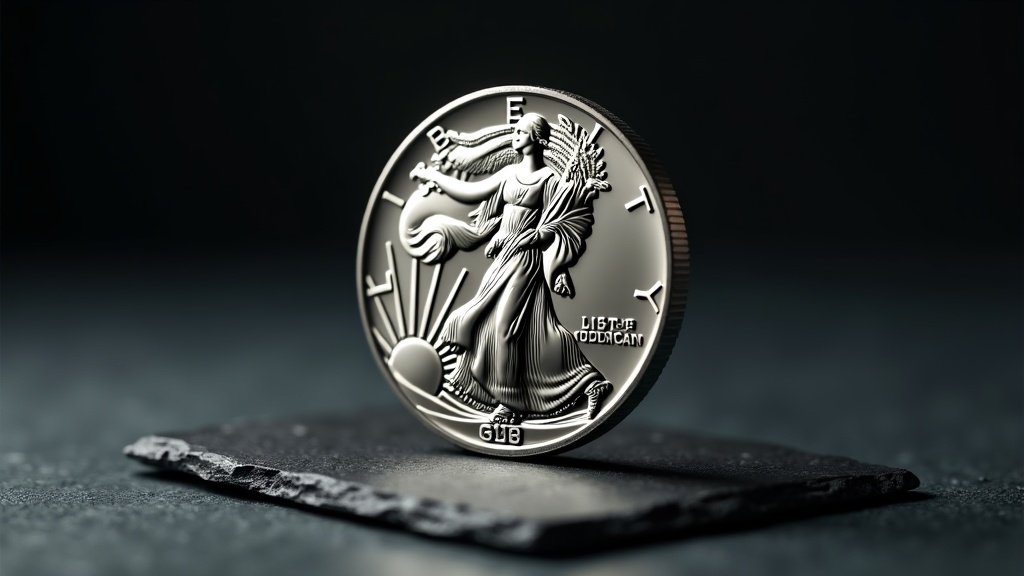
The American Silver Eagle is the United States Mint’s official silver bullion coin, struck in .999 fine silver with a face value of one dollar that is purely symbolic rather than reflective of its metal content. It is produced primarily for investors and collectors who want silver in a recognizable, government-guaranteed form, and it also has a proof and burnished version made specifically for collectors. Understanding how it’s made, what backs its purity, and what actually drives its value can help a reader evaluate one with a clear head rather than reacting to a sales pitch.
What the American Silver Eagle Actually Is
First issued in 1986, the Silver Eagle is authorized under federal law and struck at United States Mint facilities. Each coin contains one troy ounce of .999 fine silver, and the U.S. government guarantees that weight and purity — a distinction from many private-mint silver rounds, which can be excellent products but don’t carry a sovereign guarantee. The obverse reuses Adolph A. Weinman’s Walking Liberty design, originally created for the half dollar in the early twentieth century, and readers who want the backstory on that imagery may enjoy the separate guide on the Walking Liberty Half Dollar, since the two coins share artistic lineage even though they serve very different purposes.
The reverse design has changed over the coin’s history. From 1986 through 2021 it featured a heraldic eagle with a shield, and beginning in 2021 the Mint introduced a new reverse depicting an eagle in flight. Both versions remain part of the same ongoing bullion program, and neither should be assumed rarer than the other just because the design changed — production volumes and mintage figures for any given year are best confirmed through the Mint’s own reporting rather than assumed.
Bullion, Proof, and Burnished Versions
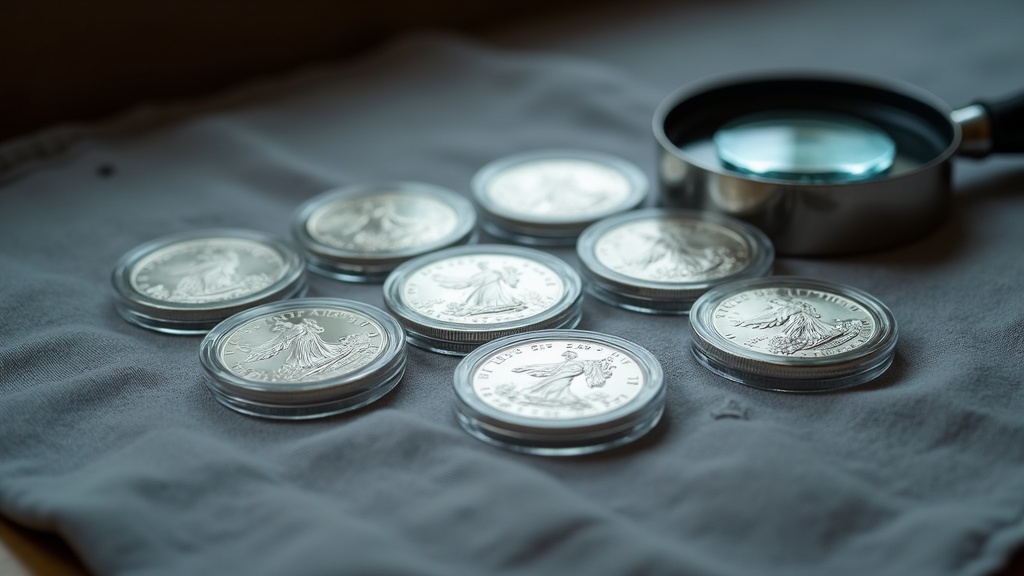
Most Silver Eagles in circulation among investors are the standard bullion strike, sold in bulk through authorized purchasers and distributed to dealers. The Mint also produces proof versions, struck with specially polished dies and planchets for a mirror-like finish, and burnished (uncirculated) versions with a distinct satin surface, both intended for collectors and typically sold directly by the Mint in limited windows. The difference between these finishes is a good entry point for understanding the broader distinction covered in the article on proof coins versus business strikes, since the same manufacturing logic applies across many U.S. coin series, not just this one.
Because proof and burnished Silver Eagles are made in smaller numbers and often carry additional collector interest, they are sometimes graded and encapsulated by third-party services. If you’re handed a slabbed example, it helps to understand generally what grading services actually do before assuming a label alone tells you everything about a coin’s desirability.
How Silver Eagles Are Made
The production process starts with silver blanks, called planchets, that are cleaned, weighed, and inspected before being fed into coining presses. Bullion strikes are typically produced at high speed for volume, while proof coins go through extra steps — hand-polishing dies, sometimes striking each coin more than once, and careful individual handling — to achieve their finish. This is part of why proof coins generally show sharper design detail and mirrored fields compared to a standard bullion strike, though “sharper” is a description of finish, not a claim about which one a person should acquire.
Every genuine Silver Eagle carries the coin’s date (and, for certain issues, a mint mark) which can be found in the same general locations described in guides on how to read the date and mint mark on a US coin. Checking these details, along with weight, diameter, and overall strike quality, is a reasonable first step if authenticity is ever in question.
What Determines a Silver Eagle’s Value
Several factors affect what any individual Silver Eagle might be worth at a given moment, and none of them can be reduced to a single fixed number in an article like this one, since silver prices move throughout each trading day. The main factors collectors and dealers generally weigh are:
- Silver content and purity — the coin’s fixed one-ounce, .999 fine silver content is the baseline for its bullion value, which tracks the live spot price of silver.
- Condition and grade — for proof, burnished, or exceptionally well-preserved bullion examples, condition can add collector value beyond the metal content, following grading principles similar to those described in the guide to what coin grading actually means.
- Rarity of the specific year or variety — some years or special finishes were produced in smaller numbers or include design varieties, which can affect demand among specialists; readers curious about this concept in general can review what coin varieties are and why they matter.
- Market demand — bullion coins can see premiums (the amount charged above melt value) rise or fall based on overall demand for physical silver, minting capacity, and broader economic sentiment.
- Authenticity and originality — a coin that has been cleaned, polished, or otherwise altered from its original surface can lose collector appeal even if its silver content is unchanged, a topic explored in the piece on how to tell if a coin has been cleaned.
Because these factors interact, the only reliable way to know what a specific coin is worth on a specific day is to check a current, reputable spot price for silver and, for anything beyond a common bullion strike, get an independent appraisal. Anyone quoting a fixed dollar figure for “what your Silver Eagle is worth” without referencing the live market is skipping a step that matters.
Silver Eagles Compared to Other Collectible Silver Coins
New collectors sometimes assume all silver U.S. coins work the same way, but there’s a meaningful difference between a modern bullion coin like the Silver Eagle — minted in large, ongoing quantities specifically to hold a fixed amount of silver — and historic circulating silver coinage such as Morgan silver dollars or pre-1965 90% silver coins, where mintage figures are fixed by history and collector value often depends heavily on date, mint mark, and survival rate. Readers interested in that older category may find useful context in the overview of the Morgan silver dollar’s history, or the broader US Coins & History archive, which covers many series minted before modern bullion programs existed.
If you’re newer to the hobby generally and want a grounding in vocabulary before going further, the beginner’s guide to coin collecting terminology and the broader Coin Basics & Identification hub are reasonable starting points that explain terms used throughout this article, like planchet, strike, and mint mark.
A Note on Sales Pressure
Because Silver Eagles are widely marketed to investors, this is an area where high-pressure sales tactics show up more than in most of the hobby — urgent “buy before the dollar collapses” framing, unsolicited calls pushing precious-metals retirement accounts, or claims that a particular coin is “guaranteed” to rise in value. Legitimate, reputable dealers do not typically need to rush a buyer into a decision, and a reasonable step before any sizable purchase is to get a second opinion or an independent appraisal from someone with no stake in the sale. Taking time to verify claims against official sources, such as the U.S. Mint’s own program information, costs nothing and can prevent a costly mistake.
Frequently asked questions about the American Silver Eagle
Is the American Silver Eagle real silver?
Yes. Since its introduction, the American Silver Eagle has been struck in .999 fine silver, with the United States government guaranteeing both the coin’s weight and purity, unlike privately minted rounds without that federal backing.
How much is a Silver Eagle worth today?
Its value largely tracks the live spot price of silver plus any premium tied to condition, finish, and demand, so there is no fixed figure — check a current, reputable spot price source or get an independent appraisal for an up-to-date answer.
What’s the difference between a proof Silver Eagle and a regular one?
A proof Silver Eagle is struck with specially polished dies for a mirror-like finish and is made for collectors, while the standard bullion version is mass-produced for investors; both contain the same one-ounce .999 fine silver content.
Do Silver Eagles get graded like other coins?
They can be. Collectors sometimes send proof, burnished, or exceptional bullion examples to third-party grading services for encapsulation and a numeric grade, though most standard bullion Silver Eagles circulate in the market ungraded.
How can I tell if my Silver Eagle is genuine?
Checking weight, diameter, date placement, and strike detail against official Mint specifications is a reasonable first step; for anything valuable or uncertain, an independent appraisal from a qualified, reputable source is the safer path.
Gold Coins Today publishes general information about coin collecting and precious metals, not financial, investment, tax or legal advice. We are writers and editors, not certified numismatists, appraisers, financial advisors or dealers. Coin and bullion values change constantly and depend on condition, authenticity and the current market — get a current appraisal or spot price from a qualified, reputable source before buying or selling, and consult a licensed financial advisor before treating precious metals as part of an investment strategy.