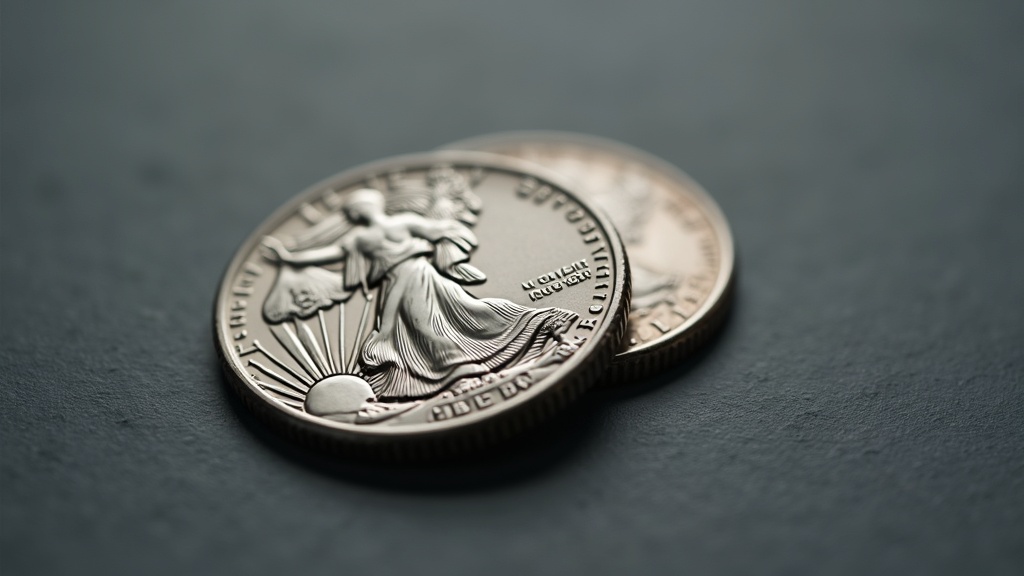
The Standing Liberty Quarter was a United States 25-cent coin minted from 1916 to 1930, designed by sculptor Hermon A. MacNeil as part of a broader early-20th-century push to modernize American coinage with more artistic, symbolic imagery. It depicts Liberty standing in a gateway holding a shield and an olive branch, paired with a flying eagle on the reverse. The series is known for a mid-run design change involving Liberty’s exposed chest, and for several dates and mint marks that collectors consider notably scarce.
Origins of the Design
By the early 1910s, the US Mint and the Treasury Department were interested in replacing several long-running coin designs with new artwork that reflected a more confident, classically inspired vision of the nation. This same era produced the Mercury dime and the Walking Liberty half dollar, both part of a coordinated effort to refresh the silver coinage. Mint officials invited a small group of sculptors to submit designs for the quarter, and Hermon MacNeil’s concept was selected for its allegorical strength: Liberty as a guardian figure, stepping forward from a wall opening to defend the country, shield raised in one hand and an olive branch extended in the other as a gesture of peace readiness rather than aggression.
The coin replaced the Barber quarter, part of the same design family covered in our overview of the Barber coinage series, which had been in circulation since the 1890s and was due for retirement under the twenty-five-year minimum rule that governed US coin design changes at the time.
Reading the Symbolism
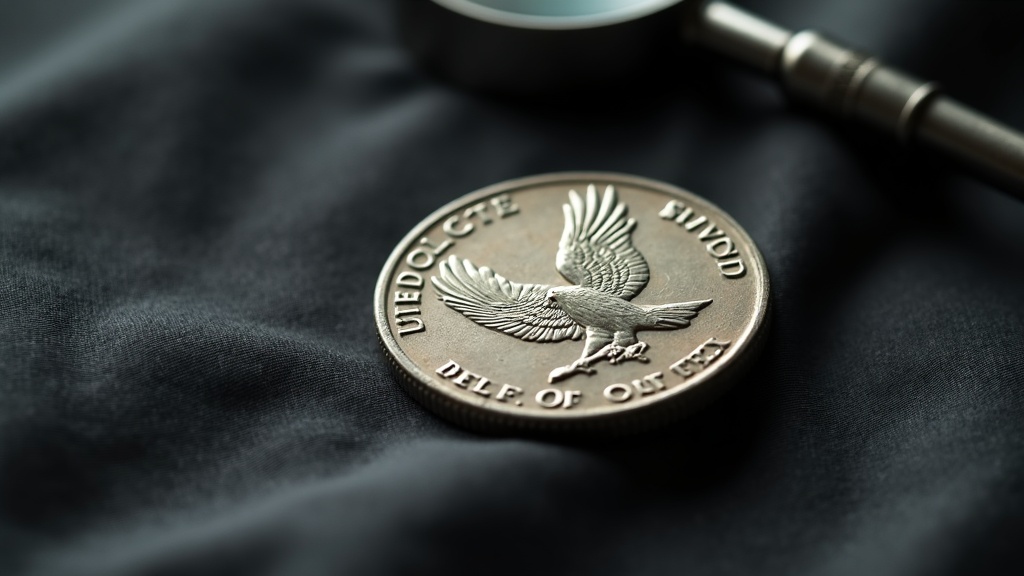
MacNeil’s obverse composition was dense with meaning for a coin of its size. Liberty stands centered in a gateway, flanked by two pillars representing the entrances to the Capitol building, suggesting the nation standing guard at its own threshold. The shield she holds is inscribed with the word LIBERTY along its top edge and is meant to symbolize preparedness, a theme resonant with the period leading into American involvement in the First World War. The olive branch in her other hand balances that martial imagery with a message of peace. Thirteen stars ring the upper portion of the coin, referencing the original colonies, and the reverse carries a flying eagle in mid-flight, wings spread, above the denomination.
Collectors interested in how mint marks and dates are positioned on coins from this era may find it useful to review a general guide to reading dates and mint marks on US coins, since the small mint mark on the Standing Liberty Quarter sits on the obverse, near the date, rather than on the reverse as with many later series.
The Mid-Series Design Change
One of the most discussed aspects of this coin’s history is a design revision that occurred in 1917. On the earliest strikes, Liberty’s right breast is exposed, a detail that reportedly drew public criticism at the time. Whether the change was made purely in response to that criticism or also reflected practical concerns about how the design wore in circulation is not something that can be stated with certainty, but the Mint modified the design partway through 1917 to add a chain mail covering over that area of Liberty’s bodice. Collectors commonly refer to the earlier version as the “Type 1” and the revised version as the “Type 2,” and both variations exist for the 1917 date, making that year a useful study piece for anyone learning to distinguish design varieties within a single series. Readers curious about how numismatists classify this kind of mid-run change more broadly may want to look at our explainer on what coin varieties are and why they matter.
The Type 2 revision also raised the relief on the date and strengthened some of the design elements on the reverse, changes made partly to address complaints that the date wore away too quickly on circulated coins, a durability problem that shows up again and again across early-1900s design experiments.
Mintage, Dates, and Notable Scarcities
The Standing Liberty Quarter was produced at the Philadelphia, Denver, and San Francisco mints across its run from 1916 through 1930, though not every mint struck the coin in every year. The 1916 date is widely recognized among collectors as a low-mintage first-year issue, since the design was only introduced late in that calendar year before full production shifted to 1917. Certain later dates and mint mark combinations from the Denver and San Francisco facilities are also considered harder to find in higher grades, in part because of the date-wear issue mentioned above, which means many surviving circulated examples have a worn or flat date that can make identification difficult without careful examination or reference to known die characteristics.
Anyone assembling a set of this series, or trying to determine whether a particular coin qualifies as a key date within the run, may find our general guide on what makes a coin a key date a helpful starting framework, since the same principles of relative mintage, survival rate, and collector demand that apply to other classic series apply here as well.
Composition and Physical Specifications
Like other regular-issue US quarters of its time, the Standing Liberty Quarter was struck in 90% silver and 10% copper, a composition often referred to informally as “junk silver” alloy when found in worn, common-date examples, though that casual term says nothing about a specific coin’s collector value. The coin has a diameter of 24.3 millimeters and a standard weight consistent with other quarters of the era. Because the design’s date and some peripheral details are prone to wear, condition assessment on this series often requires a bit more attention than on coins with more protected design elements, and it’s one of several classic series where learning to recognize authentic wear patterns versus damage is a genuinely useful skill covered in general terms in our guide to telling whether a coin has been cleaned.
Collecting Considerations Today
For collectors, the Standing Liberty Quarter offers a compact, seventeen-date run that’s approachable for someone building a type set or trying to complete a full series by date and mint mark. Because condition varies so widely due to the date-wear problem, third-party grading services are commonly used to verify both the grade and the authenticity of the date on higher-value examples; our overview of what grading services actually do explains that process in general terms for anyone new to it. As with any purchase involving classic silver coinage, a reasonable step before a significant purchase is seeking a second opinion or an independent appraisal, since legitimate, reputable dealers do not rely on high-pressure sales tactics or urgency framing to move a coin. If you’re just starting to learn how to evaluate condition and originality across different series, our broader hub on coin basics and identification is a good place to build that foundation, and our archive on US coins and history offers additional context on how this series fits into the broader story of American coinage design in the early twentieth century.
Frequently asked questions about Standing Liberty Quarters
What years did they make Standing Liberty Quarters?
The series was struck from 1916 through 1930, with production spread across the Philadelphia, Denver, and San Francisco mints, though not every mint produced the coin in every year of that span.
Why did the design change in 1917?
Partway through 1917, the Mint modified the obverse to add chain mail covering part of Liberty’s exposed chest and also raised the relief in some areas to address concerns about design wear, resulting in what collectors call Type 1 and Type 2 varieties.
What metal is a Standing Liberty Quarter made of?
It’s struck in a 90% silver, 10% copper alloy, the same standard composition used for most US silver coinage of that period, giving it a recognizable weight and diameter shared with other quarters of the era.
Why is the date often worn off on these quarters?
The date sits in a relatively exposed, low-relief position on the original design, so it tends to wear down faster than other details through normal circulation, which is part of why the Mint raised the date’s relief in the 1917 design revision.
Is the 1916 Standing Liberty Quarter rare?
The 1916 date is generally considered scarce among collectors because it was struck in limited numbers before full production began in 1917, but confirming a specific coin’s condition and authenticity is best done through careful examination or professional grading rather than assumption.
Gold Coins Today publishes general information about coin collecting and precious metals, not financial, investment, tax or legal advice. We are writers and editors, not certified numismatists, appraisers, financial advisors or dealers. Coin and bullion values change constantly and depend on condition, authenticity and the current market — get a current appraisal or spot price from a qualified, reputable source before buying or selling, and consult a licensed financial advisor before treating precious metals as part of an investment strategy.
Related reading
A Guide to Mercury Dimes, The Barber Coinage Series Explained, Understanding the Peace Dollar and Its History.