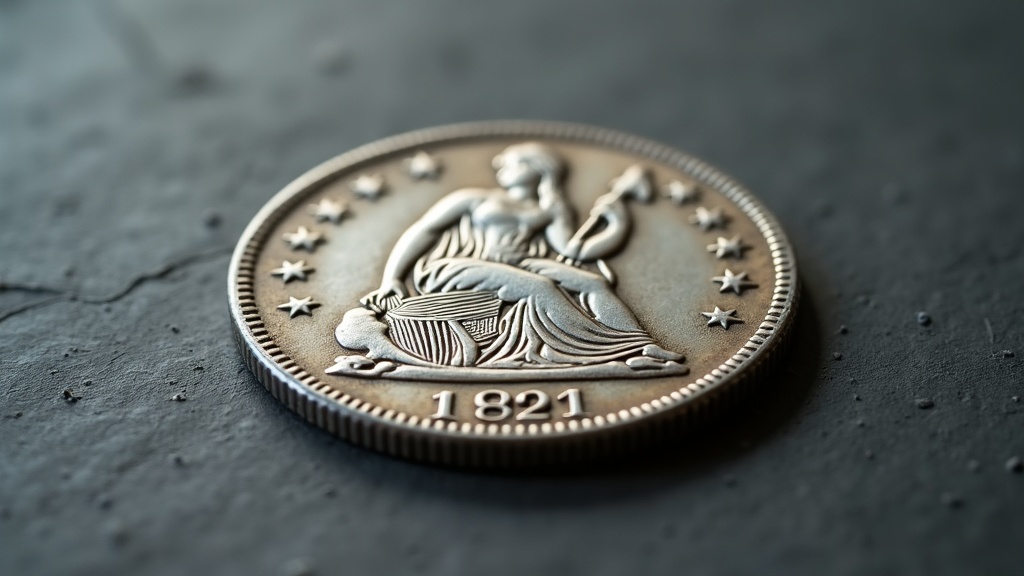
The Trade Dollar was a silver coin struck by the United States Mint from 1873 to 1885 specifically to compete with Spanish and Mexican silver coins already circulating in East Asian markets. Unlike other American silver dollars meant for domestic use, it was heavier and purpose-built for export, and it was even legal to melt or exchange abroad based on its silver weight rather than its face value. It remains a favorite among collectors today for its unusual history, its distinctive design, and the “chop marks” many examples carry from their trading days overseas.
Why the United States needed a trade-only coin
In the decades after the Civil War, American merchants and mining interests wanted a bigger share of trade with China and other Asian markets. The problem was that merchants there already trusted the Spanish milled dollar and later the Mexican peso, both of which had a long track record as a known quantity of silver. American silver dollars, by comparison, were less familiar and often discounted in value simply because they were unknown.
Congress responded with the Coinage Act of 1873, authorizing a new silver dollar denomination made specifically heavier than the standard dollar circulating at home. The idea was straightforward: give merchants a coin containing slightly more silver than a regular dollar so that it would be accepted at face value in foreign ports, matching or exceeding the silver content of the coins it was competing against. Silver-mining states, which were producing large quantities of the metal at the time, also had an economic interest in seeing a new outlet for silver coinage.
Specifications and design
The Trade Dollar was struck in .900 fine silver, the same fineness used in standard US silver coinage of the era, but at a heavier total weight than a regular dollar so its actual silver content would be more competitive in foreign trade. The obverse features a seated Liberty figure facing left, holding an olive branch, with the U.S. shield behind her and a ribbon reading LIBERTY at her feet — a design credited to Chief Engraver William Barber. The reverse displays a bald eagle with three arrows and an olive branch, encircled by the coin’s weight and fineness spelled out in text, a detail that underscores just how central the bullion content was to the coin’s purpose. Readers unfamiliar with how to interpret dates, mintmarks, and other identifying features on older US coinage may find our guide on how to read the date and mint mark on a US coin useful background before examining a Trade Dollar closely.
Chop marks and their significance
One of the more distinctive features found on many surviving Trade Dollars is the presence of small punched or stamped symbols, known as chop marks, applied by Chinese merchants and money changers. Each merchant used a distinctive mark to verify that a coin had been tested and accepted as genuine silver of the stated weight. A coin that passed through several hands in commerce might accumulate multiple chop marks. While these marks technically damage the coin’s original surface, collectors today often view heavily chop-marked Trade Dollars as tangible evidence of the coin doing exactly the job it was designed for — circulating and being trusted in foreign trade.
Domestic circulation problems and demonetization
While the Trade Dollar performed its intended role overseas reasonably well, its domestic story was messier. Silver prices fell after the coin’s introduction, meaning the bullion value of a Trade Dollar dropped below its one-dollar face value. Unscrupulous employers reportedly used the coins to pay workers at face value while the coins were actually worth less as bullion, creating public resentment. In response, Congress revoked the Trade Dollar’s legal tender status domestically in 1876, meaning merchants and banks in the United States were no longer required to accept it at face value, even though the Mint continued striking business-strike versions for export for several more years.
Production for circulation effectively ended by 1878, though the Mint continued to strike small numbers of proof Trade Dollars for collectors through 1883, and a limited, unofficial run is generally described as having occurred in 1884 and 1885 outside normal recorded production. Those later proof-only dates are scarce and are often discussed in the same breath as other classic American rarities. Collectors interested in how key, low-mintage dates affect desirability across different series may want to read about what makes a coin a key date for general context, since the principles that apply to a key-date Morgan or Barber coin apply here as well.
How the Trade Dollar compares to other US silver dollars
Because the Trade Dollar was a special-purpose export coin, its design philosophy differed from dollars meant purely for domestic circulation, such as the later Morgan silver dollar or the Peace dollar. Those coins were struck to a standard weight tied to the domestic monetary system and never carried the export-oriented weight adjustment or the explicit weight-and-fineness inscription seen on the Trade Dollar’s reverse. If you’re building a broader sense of how US coin design and purpose evolved across the 19th century, our US coins and history hub ties these different series together in one place.
| Feature | Trade Dollar | Standard Silver Dollar (era) |
|---|---|---|
| Primary purpose | Export trade coinage | Domestic circulation |
| Fineness | .900 silver | .900 silver |
| Legal tender status | Revoked domestically in 1876 | Full legal tender |
| Common surface features | Often chop-marked | Typically unmarked |
What collectors look for today
Condition, originality, and the presence or absence of chop marks all play into how a given Trade Dollar is perceived by collectors, alongside the usual factors of date, mint mark, and overall rarity. A coin’s grade — whether it falls into circulated ranges or higher mint-state categories — has a major effect on how it’s evaluated, and readers new to grading terminology may find it helpful to review what coin grading actually means and how abbreviations like MS, AU, and XF are used, explained in our piece on what those grade abbreviations mean. Because Trade Dollars were often cleaned, chop-marked, or otherwise altered from their original surfaces during decades of handling, learning how to tell if a coin has been cleaned is a genuinely useful skill before assuming a coin is in its original state.
Given how varied condition and originality can be within this series, and how much that variation affects desirability, getting an independent opinion from a knowledgeable, reputable source before a significant purchase is a reasonable step rather than an unnecessary one. Legitimate dealers and appraisers don’t need to pressure a buyer into a quick decision, and a coin’s story — including any chop marks — is worth understanding fully before deciding what it means for you.
Frequently asked questions about the Trade Dollar
What is a US Trade Dollar worth today?
Value depends on condition, rarity of the specific date and mint mark, whether the coin has chop marks, and current silver market conditions. Rather than relying on a fixed figure, check a current appraisal from a reputable numismatic source or a live silver spot price for general bullion context.
Why do Trade Dollars have punch marks on them?
Those marks, called chop marks, were applied by Chinese merchants and money changers to verify that a coin was genuine silver of the stated weight during the era it circulated in Asian trade. Many surviving Trade Dollars carry one or several of these marks from repeated commercial use.
Is the Trade Dollar legal tender in the United States?
No. Congress revoked its domestic legal tender status in 1876 due to problems with its silver value falling below its face value, though the Mint continued producing it for export and for collectors afterward. It has no special modern legal tender status either.
How can I tell if my Trade Dollar is a rare date?
Check the date and mint mark carefully, since mintages varied significantly by year and location, with the later proof-only issues generally considered scarcer. Comparing your coin’s details against reference information from an established grading service or numismatic organization is the most reliable way to confirm rarity.
Should I clean my Trade Dollar before selling it?
Cleaning a coin, even gently, typically removes original surface material and can reduce both its grade and its appeal to collectors, so it’s generally discouraged. If you’re unsure about a coin’s surface condition, an independent appraisal before doing anything to the coin is a sensible first step.
Gold Coins Today publishes general information about coin collecting and precious metals, not financial, investment, tax or legal advice. We are writers and editors, not certified numismatists, appraisers, financial advisors or dealers. Coin and bullion values change constantly and depend on condition, authenticity and the current market — get a current appraisal or spot price from a qualified, reputable source before buying or selling, and consult a licensed financial advisor before treating precious metals as part of an investment strategy.