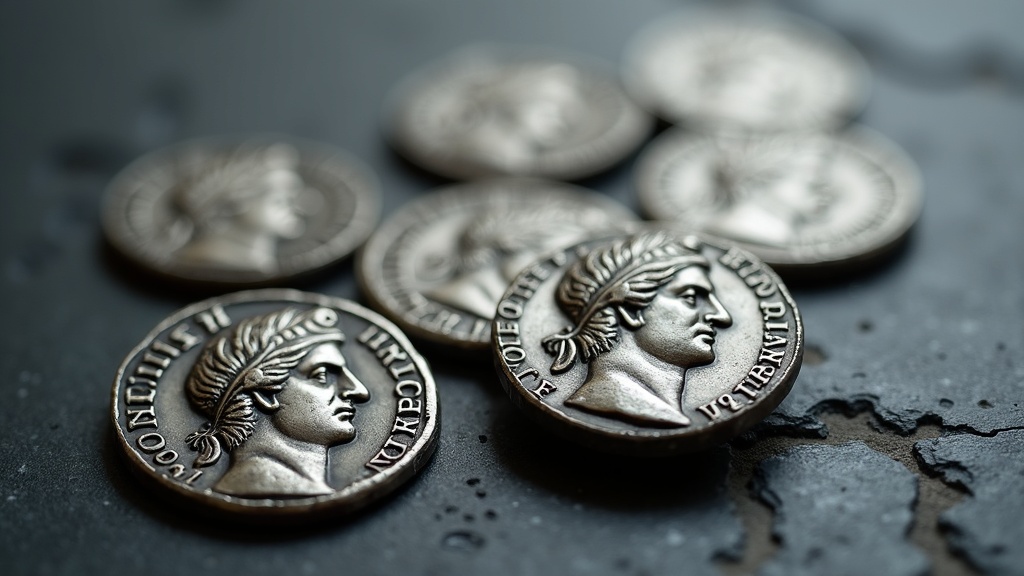
Roman Republic coins (roughly 300s BC to 27 BC) generally show shared civic symbols, deities, and moneyer names rather than a single ruler, reflecting a government run by elected magistrates. Roman Empire coins (27 BC onward) shift to portraits of emperors and their families, used partly as political propaganda across a vast territory. For collectors, this means Republic pieces often emphasize mythology and Roman institutions, while Empire coins offer a more personal, dated record of individual rulers, making them easier to organize by reign but sometimes less varied in theme.
Two different political systems, two different coin stories
The Roman Republic operated with elected magistrates and a Senate, and its coinage reflects that collective structure. Silver denarii and bronze issues from this period frequently name a “moneyer,” a Roman official temporarily responsible for the mint’s output, who often chose imagery tied to his own family’s history or to a deity. You’ll see gods like Roma, Jupiter, or Victory, along with mythological scenes referencing early Roman legends. There’s no single dominant face because there was no single dominant ruler.
Once Augustus consolidated power and the Empire began, coinage became a tool of imperial communication. Portraits of the emperor, and often his heirs or family members, appear on the obverse, while reverses might celebrate military victories, building projects, or virtues the emperor wanted associated with his rule. Because emperors changed relatively often, and each wanted recognition, Imperial coinage tends to be more tightly datable and more focused on a single named individual per issue. Readers newer to the era may find it useful to start with a general overview like our introduction to ancient Roman coins before comparing the two periods in depth.
Denominations and metals across both eras
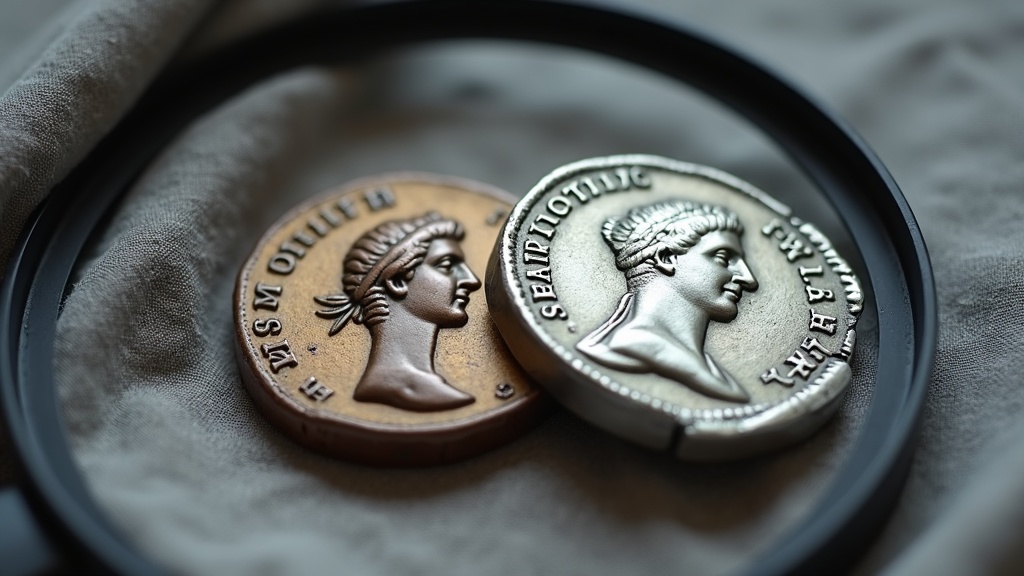
Both periods used a mix of silver, bronze, and (later) gold denominations, but the specifics shifted over time. The Republic’s main silver coin was the denarius, alongside smaller bronze denominations used for everyday transactions. As the Empire progressed, additional denominations appeared and disappeared, and the silver content of coins like the denarius gradually declined during periods of economic strain, a pattern numismatists often point to when discussing Rome’s later financial pressures. Gold coinage (the aureus) became more prominent under the Empire as a higher-value denomination, though it circulated less widely among ordinary people than silver and bronze.
For anyone comparing Roman coinage to other ancient traditions, it can help to look at how Greek city-states approached similar questions of imagery and metal choice; our guide to collecting ancient Greek coins covers that separate but related tradition.
Republic coinage: key characteristics
- Imagery tends toward deities, personifications, and family or clan symbols tied to the issuing moneyer.
- Inscriptions typically name the moneyer or magistrate rather than a single ruler.
- Designs can be harder to date precisely without reference to known moneyer lists and mint records.
- Bronze and silver denominations were both common, with certain issues produced in larger volume during periods of military campaigning.
Empire coinage: key characteristics
- Portraits of the reigning emperor (and sometimes empresses, heirs, or co-rulers) dominate the obverse.
- Reverse legends often reference specific titles, offices, or anniversaries, which can help narrow down an approximate date.
- Later Imperial issues show visible changes in metal quality and coin size as the government adjusted to economic pressures.
- A far larger number of emperors, usurpers, and short-lived rulers means more individual “types” for collectors to encounter over the centuries the Empire lasted.
Attribution and dating: why it’s harder than it looks
One practical difference collectors notice quickly is how attribution works. Because Imperial coins usually carry a recognizable portrait and often a legend naming the emperor and sometimes a specific office or year of tribunician power, they can frequently be narrowed to a fairly specific range of years, sometimes even a single year, once compared against reference catalogs. Republic coins, by contrast, often require matching the moneyer’s name and design style against known series, since there’s no ruler’s face to anchor the date. This isn’t a knock against Republic coinage’s interest or historical value; it just means research leans more heavily on catalog cross-referencing and less on an obvious visual cue like a portrait.
This is also where general coin literacy pays off no matter the era. Understanding how coin grading works for condition, and how to think about a coin’s inscriptions and design elements, applies just as much to a 2,000-year-old denarius as it does to a modern coin. If you’re building foundational vocabulary for the hobby, our beginner’s guide to coin collecting terminology is a reasonable starting point before working through ancient-specific reference material.
Condition, authenticity, and what actually drives interest
As with any historic coin, several factors influence how collectors and dealers evaluate a Roman piece: the sharpness of the strike, how much wear the surfaces show, whether the coin has been cleaned or altered, the rarity of the specific type or moneyer/emperor combination, and simple market demand at a given time. Ancient coins were struck by hand, so even coins from the same issue can look noticeably different depending on how centered the strike was and how the flan (the blank metal disc) took the design. This makes ancient coin evaluation somewhat different from grading a machine-struck modern coin, and it’s part of why an independent, current appraisal from someone experienced specifically with ancient coinage is worth seeking before any significant purchase or sale.
Cleaning is a particularly important consideration with ancients, since improper cleaning can strip a coin’s natural surface (patina) and reduce both its historical integrity and its appeal to collectors. The general principles in our piece on how to tell if a coin has been cleaned apply here, though ancient bronze and silver can show different surface behaviors than more modern coinage, which is another reason a knowledgeable second opinion matters.
Where beginners often start
Many newer collectors gravitate toward common bronze issues from either period, since these tend to be more accessible than rarer silver or gold types, and they still carry genuine historical weight; a modest bronze coin from a well-known emperor’s reign, or a common Republic denomination, can be a legitimate entry point into the hobby. From there, some collectors choose to focus on a specific emperor, dynasty, or theme (military victory types, temple architecture, deities), while others prefer to build a broad timeline moving from Republic through the height of the Empire.
Because ancient coins carry no built-in certification the way modern mint products do, buyers should be especially attentive to seller reputation and documentation. Reputable dealers in ancient coinage are generally patient, provide clear attribution details, and don’t pressure a buyer into a same-day decision. If you encounter high-pressure sales tactics, urgent “buy now” framing, or claims that a coin’s value is guaranteed to rise, treat that as a signal to slow down and seek an independent opinion before spending significant money, regardless of how the coin is described.
Republic vs Empire at a glance
| Feature | Roman Republic | Roman Empire |
|---|---|---|
| Approximate period | Roughly 3rd century BC to 27 BC | 27 BC through the later Imperial centuries |
| Typical obverse imagery | Deities, personifications, family/clan symbols | Portrait of the reigning emperor or family member |
| Attribution basis | Moneyer name, style, catalog cross-reference | Portrait plus inscribed titles and offices |
| Dating precision | Often a broader range without a named ruler | Often narrower, tied to reign or specific title |
| Common metals | Silver denarius, various bronze denominations | Silver denarius (declining purity over time), bronze, gold aureus |
Frequently asked questions about collecting Roman Republic vs Empire coins
What’s the main difference between Roman Republic and Roman Empire coins?
Republic coins usually feature deities, mythological scenes, and the name of an elected moneyer, while Empire coins usually feature a portrait of the reigning emperor, making Imperial coins generally easier to attribute to a specific ruler and time period.
Are Roman Republic coins rarer than Roman Empire coins?
Rarity varies enormously by specific type rather than by era as a whole; some Republic issues are relatively available while others are quite scarce, and the same is true across the many emperors and mints of the Imperial period, so it’s best evaluated type by type.
How can I tell which emperor is on a Roman coin?
Imperial coins typically include an inscribed legend around the portrait naming the emperor and sometimes his titles or offices, which can be matched against published reference catalogs; a clear photo and careful reading of the legend are usually the starting point.
Is it harder to date Roman Republic coins than Empire coins?
Generally yes, because Republic coins lack a ruler’s portrait to anchor the date and instead rely on identifying the moneyer and comparing design style to known series, whereas Imperial coins often carry titles tied to specific years of an emperor’s reign.
What should I look for before buying an ancient Roman coin?
Consider the clarity of the strike, evidence of past cleaning or damage, how confidently the piece can be attributed, and the seller’s transparency about sourcing and condition, and seek an independent, current appraisal from someone experienced with ancient coinage before a significant purchase.
Gold Coins Today publishes general information about coin collecting and precious metals, not financial, investment, tax or legal advice. We are writers and editors, not certified numismatists, appraisers, financial advisors or dealers. Coin and bullion values change constantly and depend on condition, authenticity and the current market — get a current appraisal or spot price from a qualified, reputable source before buying or selling, and consult a licensed financial advisor before treating precious metals as part of an investment strategy.