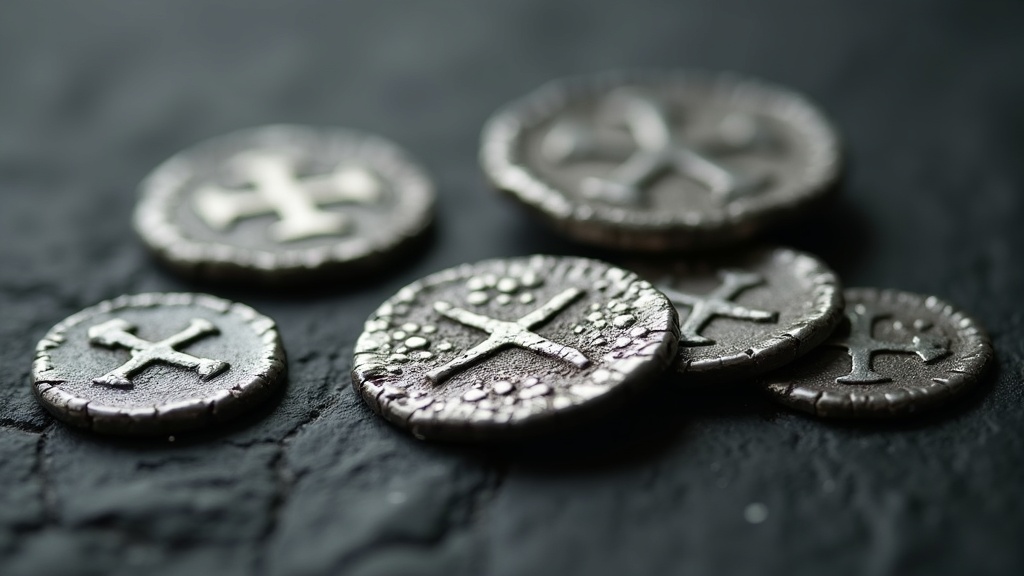
Medieval European coinage refers to the coins struck across Europe roughly between the fall of the Western Roman Empire and the start of the Renaissance, a period spanning nearly a thousand years. These coins were mostly hand-hammered from silver or gold, often irregular in shape, and issued by an enormous range of kings, bishops, city-states, and feudal lords rather than a single central authority. Understanding them means understanding a fragmented, evolving monetary landscape rather than one consistent “medieval coin.”
A fractured inheritance from Rome
When the Western Roman Empire dissolved in the fifth century, its coordinated coinage system dissolved with it. Successor kingdoms in Gaul, Italy, and Spain initially imitated Roman and Byzantine gold coins, both in weight and imagery, because Roman coinage carried recognized trust across the Mediterranean world. Readers coming from an introduction to ancient Roman coins or who have compared Roman Republic and Empire issues will notice medieval coinage inherited some of the same portrait and inscription conventions, even as production quality and metal purity gradually declined in many regions.
The Byzantine Empire, the continuation of Rome in the east, kept minting a relatively stable gold coin for centuries, and its coinage circulated widely as a trusted standard even in Western Europe long after Rome’s fall. In the West, however, gold coinage became scarce for a time, and silver became the everyday currency of trade.
The rise of the silver penny
By the eighth century, the Carolingian monetary reforms associated with the Frankish kingdom established a silver penny (denier) as the base unit of currency across much of Western Europe. This system, with its subdivisions of pounds, shillings, and pence, proved remarkably durable; variations of it persisted in parts of Europe for close to a thousand years. England adopted a version of this structure that eventually produced its own long-running silver penny tradition.
These early medieval pennies were struck by hand: a blank disc of silver was placed between two engraved dies, and a moneyer struck the top die with a hammer to imprint the design on both faces at once. This “hammered coinage” method explains why medieval coins are frequently off-center, irregularly shaped, or unevenly struck compared to later machine-made pieces. Collectors and beginners exploring general coin collecting terminology will find that many terms describing strike quality and centering trace back to describing exactly these kinds of imperfections.
Feudal fragmentation and local minting rights
Unlike a modern nation with a single mint, medieval Europe saw minting rights distributed among kings, dukes, counts, bishops, abbots, and free cities. A count might hold the right to strike coins in his own name within his territory, and a bishop might do the same in his diocese. This produced an enormous diversity of coin types, often sharing a similar general weight and silver content so they could circulate somewhat interchangeably in regional trade, but bearing distinct local designs, inscriptions, and mint marks.
This fragmentation makes medieval European coinage a genuinely broad field for collectors interested in world and ancient coins generally. A single region might have issued coinage under dozens of different lords over a few centuries, and identifying exactly who struck a given piece, and when, is part of what makes the subject engaging rather than straightforward.
Common coin types collectors encounter
- Deniers and pennies: small silver coins forming the base of everyday transactions across much of the medieval period.
- Groats: larger silver coins introduced later in the medieval period, worth several pennies, reflecting a need for higher-value coinage as trade expanded.
- Gold florins and ducats: introduced by Italian city-states in the thirteenth century as international gold currency of standardized purity, widely imitated across Europe.
- Bracteates: extremely thin coins struck on one side only, typical of parts of medieval Germany and Central Europe, where the design impresses through to the reverse.
- Ecclesiastical issues: coins struck under the authority of a bishop or abbey rather than a secular ruler.
Debasement, reform, and the return of gold
Silver content in medieval coinage was not always stable. Rulers facing financial pressure sometimes reduced the silver purity of their coinage, a practice known as debasement, which effectively stretched a limited metal supply further but also eroded public trust and often triggered price increases. Periodic coinage reforms attempted to restore consistent weight and fineness, and some of the most notable medieval monetary reforms were explicitly framed as restoring confidence in a currency that had been quietly weakened over time.
Gold coinage returned to widespread circulation in Western Europe from the thirteenth century onward, as expanding trade networks and growing city-states needed a stable high-value currency for large transactions and international commerce. The Florentine florin and Venetian ducat became reference standards that other mints across Europe imitated in weight and purity, in much the same way that certain modern bullion coins, discussed elsewhere on this site in guides to coins like the American Gold Eagle, serve as widely recognized standards today.
What collectors and researchers look for
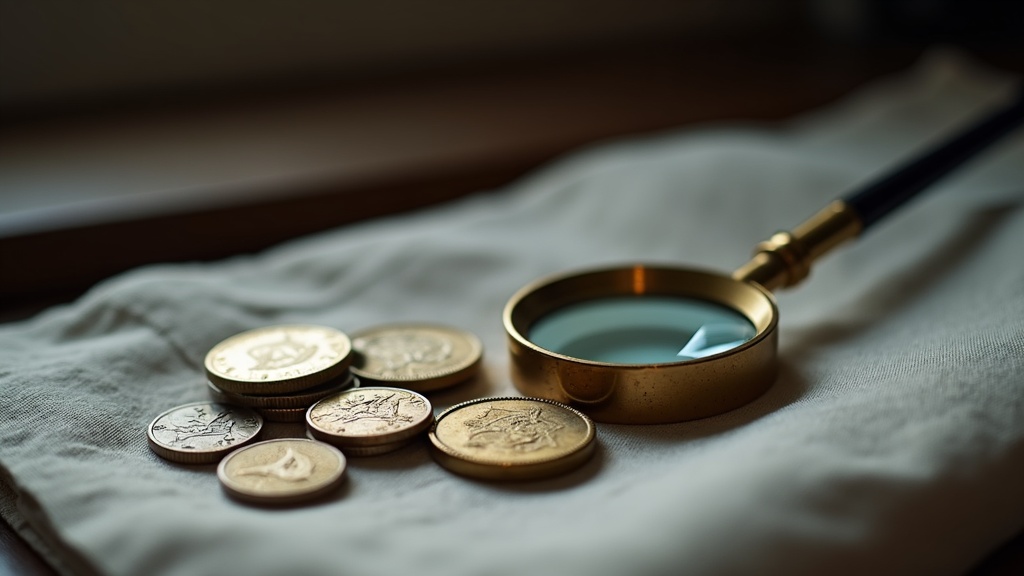
Because medieval coins were hand-struck in huge variety, identification often relies on close comparison of legends (the inscribed text), heraldic devices, mint marks, and known weight standards rather than a single simple lookup. Anyone approaching this field benefits from the same foundational skills covered in coin basics and identification resources: learning to read inscriptions carefully, understanding how strike quality affects appearance, and recognizing that wear, past cleaning, or damage can all significantly change how a coin is assessed.
Because these coins are old, hand-made, and often found after long burial or circulation, surface condition varies enormously from piece to piece. A coin that has been aggressively cleaned in the past can lose the natural surface texture that specialists look for, which is one reason it’s worth understanding how to tell if a coin has been cleaned before forming judgments about a piece’s condition or authenticity.
A note on buying and authenticity
Medieval coins are collected worldwide, and genuine, honestly represented pieces are widely available through reputable channels. As with any historical coinage, authenticity, condition, and correct attribution all affect how a piece is regarded, and these are questions best answered by an independent appraisal or a qualified specialist rather than a seller’s own claims. This is especially true given that this niche, like precious metals generally, can attract high-pressure sales tactics or urgency-driven pitches. A legitimate dealer or auction house will not pressure a buyer to decide quickly, and seeking a second opinion before a significant purchase is a reasonable, ordinary step, not a sign of distrust.
Frequently asked questions about medieval European coinage
What metal were most medieval European coins made of?
Most everyday medieval coins were silver, especially the small pennies and deniers that formed the backbone of local trade. Gold coinage existed but was less common until the thirteenth century, when city-states like Florence and Venice reintroduced standardized gold coins for larger transactions.
Why are medieval coins irregularly shaped?
Medieval coins were hammered by hand rather than machine-struck, using a blank metal disc placed between two engraved dies and struck with a hammer. This process naturally produced coins with uneven edges, off-center designs, and varying thickness compared to later milled coinage.
How can I tell who issued a medieval coin?
Attribution generally relies on reading the inscribed legend around the coin’s edge, comparing heraldic symbols or portraits to known rulers, and checking mint marks against reference catalogs. Because so many local authorities issued coinage, careful comparison is usually needed rather than a quick visual match.
Are medieval coins rare or common today?
It varies enormously by type, ruler, and region; some medieval issues survive in meaningful numbers because they were struck over long periods or hoarded in bulk, while others are genuinely scarce. Rarity for any specific coin is best confirmed through reference catalogs or a qualified appraisal rather than assumption.
What determines the value of a medieval coin?
Value depends on factors like metal purity, historical rarity, the specific ruler or mint, condition, and current collector demand, similar to other historical coinage. Because these factors shift and because condition assessment takes experience, a current appraisal from a reputable, qualified source is the most reliable way to understand a specific piece.
Gold Coins Today publishes general information about coin collecting and precious metals, not financial, investment, tax or legal advice. We are writers and editors, not certified numismatists, appraisers, financial advisors or dealers. Coin and bullion values change constantly and depend on condition, authenticity and the current market — get a current appraisal or spot price from a qualified, reputable source before buying or selling, and consult a licensed financial advisor before treating precious metals as part of an investment strategy.