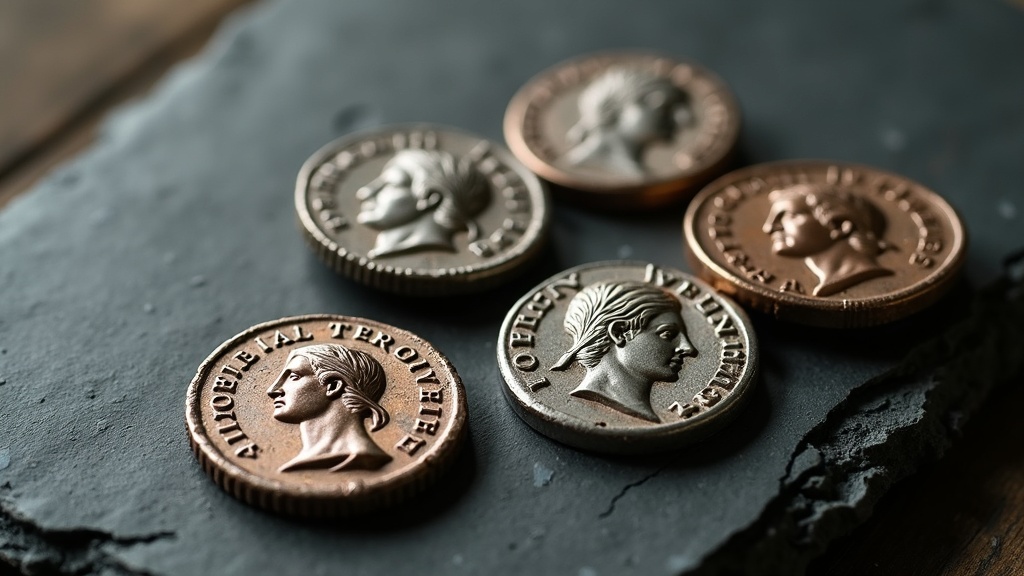
Ancient Roman coins are the struck bronze, silver, and gold pieces issued across roughly a thousand years of Roman history, from the early Republic through the fall of the Western Empire and into the Byzantine period. They range from crude cast bronze bars to finely engraved silver denarii and gold aurei bearing the faces of emperors, and they survive today in large enough numbers that beginners can realistically own a genuine piece of that history without specialized training, though authentication and condition assessment still matter a great deal.
A very long coinage history
Rome’s coinage evolved over centuries, and understanding roughly where a coin sits in that timeline helps make sense of everything else about it. Early Roman currency, going back to around the fourth century BCE, consisted of heavy cast bronze pieces before the Republic moved toward struck coinage modeled loosely on Greek city-state practices in southern Italy and Sicily.
By the late third century BCE, the denarius emerged as the backbone of Roman silver coinage, and it remained the standard silver denomination for centuries. Bronze denominations like the as, sestertius, and dupondius circulated alongside it for everyday transactions, while gold coinage, most famously the aureus, was reserved for larger payments and often carried the clearest, most detailed imperial portraiture. Later, as the Empire’s finances shifted, the gold solidus introduced under Constantine became the dominant high-value coin of Late Antiquity and continued in use, in evolving forms, well into the Byzantine era.
Readers coming from a background in United States coinage, perhaps through our US coins and history archive, will notice a similar pattern: denominations rise, fall, and get redefined as governments respond to economic pressure, war, and changing bullion supply. Roman coinage shows that same pattern on a much longer timescale.
Metals, purity, and debasement
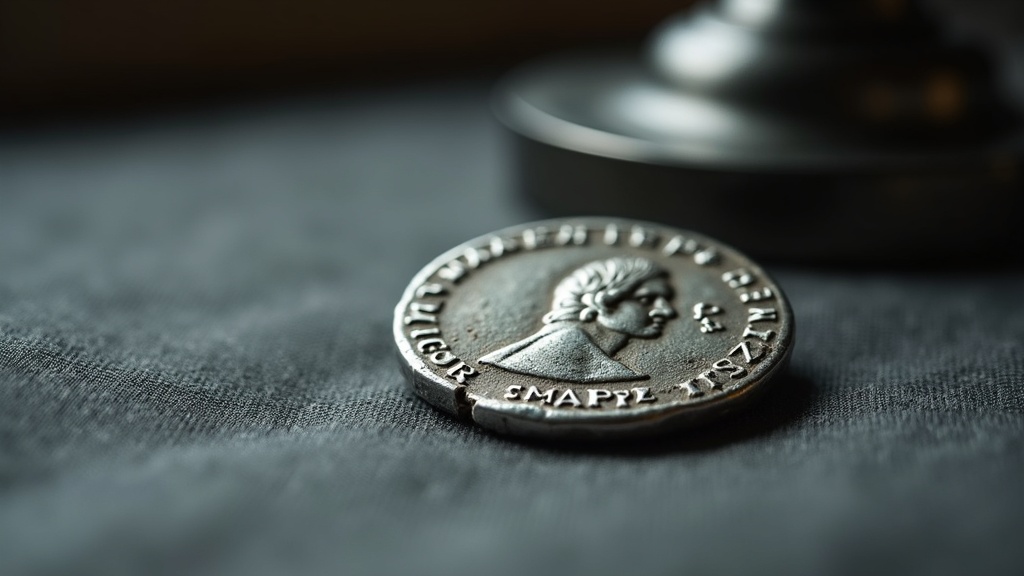
Roman coins were made primarily from three metals: bronze or copper alloys for everyday small change, silver for the denarius and its successors, and gold for the aureus and later the solidus. Unlike modern bullion coins with a fixed, government-guaranteed fineness, Roman silver purity fluctuated considerably over time as emperors faced military and administrative costs that outpaced revenue.
The denarius, originally struck in relatively high-purity silver, was progressively debased through the second and third centuries CE, eventually giving way to coins that were mostly bronze with only a thin silver wash. This debasement is a well-documented feature of the coinage rather than a modern estimate, and it’s one reason collectors and researchers pay close attention to a coin’s specific period and mint rather than assuming any “denarius” meets a single fixed standard. Anyone weighing the metal content of an ancient coin as part of its appeal should treat that as one factor among several, alongside rarity, condition, and historical significance, rather than a simple bullion calculation.
Reading a Roman coin
Roman coins typically carry a portrait or symbolic image on the obverse and a reverse design that might depict a deity, a military victory, a building, or a propagandistic message tied to the ruling emperor. Around the edge runs a legend in abbreviated Latin, usually identifying the emperor by name and titles. These abbreviations can look intimidating at first, but they follow recurring patterns, and building familiarity with common terms is similar to learning any specialized vocabulary. Readers new to the hobby in general may find it useful to start with our broader beginner’s guide to coin collecting terminology before tackling Latin abbreviations specifically.
Unlike modern coins, ancient Roman pieces were struck by hand using engraved dies, which means no two coins from the same issue are perfectly identical, and mint marks or officina marks (workshop indicators) can appear in different positions or forms. This hand-struck nature also means centering, strike quality, and die wear vary enormously from coin to coin, which has a direct effect on how a piece is judged.
Common denominations to know
- As — a base bronze/copper denomination used for small daily transactions.
- Denarius — the standard silver coin of the Republic and early-to-mid Empire.
- Sestertius — a larger bronze/brass coin, often prized for its broad flan and detailed reverse scenes.
- Aureus — the primary gold coin of the early and middle Empire.
- Solidus — the gold standard introduced under Constantine, used into the Byzantine era.
Grading and condition on ancient coins
Grading conventions for ancient coins differ from the numeric grading scale used for most US coins. Rather than a strict numerical scale, ancient coins are more commonly described with adjectival grades (such as fine, very fine, or extremely fine) combined with notes about centering, strike quality, and surface problems. Readers familiar with the American approach described in our overview of the Sheldon coin grading scale should understand that ancient coin grading borrows some of that vocabulary but applies it more loosely, with more weight given to how well the design elements survived two thousand years of circulation, burial, and handling.
Third-party grading and encapsulation services do grade and slab select ancient coins, and that process works somewhat differently than it does for modern issues; our explainer on what grading services actually do covers the general mechanics that carry over, though ancient-coin attribution often also depends on reference catalogs specific to Roman numismatics.
Condition, cleaning, and authenticity concerns
Most ancient Roman coins that survive today were buried, lost, or hoarded for centuries, so they often arrive with encrustation, corrosion, or uneven surfaces that reflect their long burial environment rather than mishandling. This is a critical difference from most US coin collecting: aggressive cleaning that might be considered acceptable conservation for a heavily encrusted ancient bronze could be actively harmful, or could strip away exactly the kind of natural surface that experienced collectors look for. Our general guide on how to tell if a coin has been cleaned lays out warning signs like unnatural shine or hairline scratches that apply broadly, though ancient coins add their own layer of complexity around conservation versus damage.
Authenticity is another area where ancient coins demand extra caution. Because Roman coins were produced in enormous quantities over centuries and many common types survive in meaningful numbers, well-informed collecting is possible, but forgeries and modern reproductions do circulate, ranging from obvious tourist-souvenir pieces to more convincing cast or struck fakes. A reasonable approach for anyone considering a purchase, especially a larger one, is to seek a second opinion or an independent evaluation before committing, and to be wary of any seller using high-pressure tactics, urgent scarcity claims, or crisis-driven pitches about currency collapse — legitimate dealers in ancient coins, like reputable dealers in any coin, do not need to rush a buyer into a decision.
Starting to collect ancient Roman coins
For someone new to the hobby generally, the mechanics of starting a collection, choosing storage, and setting a collecting focus are similar whether the coins are ancient or modern; our guide on how to start a coin collection from scratch covers those fundamentals. Many beginners collecting Roman coins choose a focus, such as a specific emperor, dynasty, denomination, or reverse theme, since the field is broad enough that an unfocused approach can quickly become overwhelming. Reference catalogs specific to Roman coinage, along with resources from established numismatic organizations, are generally more useful for attribution than general coin identification guides, though the basics of examining a coin under magnification and understanding surface wear translate across both fields; readers can find that groundwork in our coin basics and identification archive.
Value in ancient coins, as with any collectible coin, depends on a combination of rarity, historical importance, condition, strike quality, and current market demand, and it shifts over time. Rather than relying on a fixed figure, it’s worth checking current guidance from a qualified, reputable source, such as an independent appraisal or a recognized grading service’s published resources, before making a significant purchase or sale.
Frequently asked questions about ancient Roman coins
Are ancient Roman coins actually affordable to collect?
Many common Roman bronze and worn silver coins are accessible to beginning collectors because they survive in significant numbers, though condition, rarity of the specific emperor or type, and gold content can push certain pieces well beyond that range; current pricing is best checked with a reputable, qualified source.
How can I tell if an ancient Roman coin is real?
Look at weight, metal color, edge details, and die-struck versus cast characteristics, and compare the design to published reference catalogs; because convincing fakes exist, an independent opinion from an experienced numismatist or a recognized grading service is a reasonable step before a significant purchase.
What is the most common ancient Roman coin found today?
Small bronze coins, along with later debased silver-washed denominations from the third century CE, tend to survive in the largest quantities because they were produced heavily and often lost or hoarded in bulk, though exact survival figures vary by type and aren’t something we’ll invent a number for.
Should I clean an ancient Roman coin I found or bought?
Generally, no — aggressive cleaning can permanently damage surfaces, remove natural patina, and reduce both historical and collectible interest; if a coin is heavily encrusted, gentle conservation guidance from an experienced numismatist is safer than home cleaning methods.
Do ancient Roman coins get graded like US coins?
Some are graded and encapsulated by third-party services, but ancient coin grading typically relies more on descriptive terms like fine or extremely fine combined with notes on centering and surface condition, rather than the strict numeric approach used for most modern US coins.
Gold Coins Today publishes general information about coin collecting and precious metals, not financial, investment, tax or legal advice. We are writers and editors, not certified numismatists, appraisers, financial advisors or dealers. Coin and bullion values change constantly and depend on condition, authenticity and the current market — get a current appraisal or spot price from a qualified, reputable source before buying or selling, and consult a licensed financial advisor before treating precious metals as part of an investment strategy.