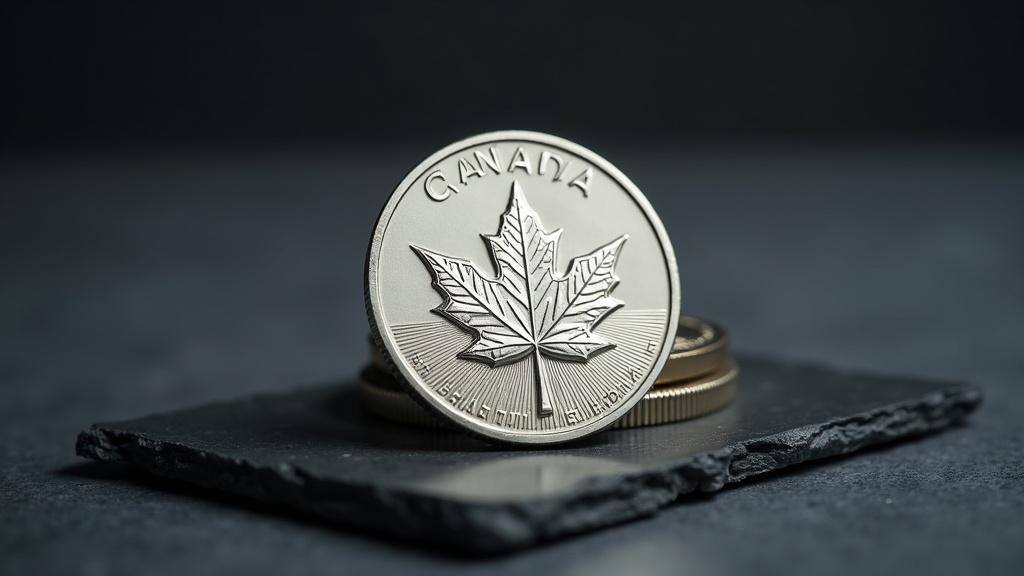
The Canadian Maple Leaf is a government-issued bullion coin produced by the Royal Canadian Mint in gold, silver, platinum, and palladium, best known for its high purity and the maple leaf design on its reverse. It’s sold primarily for its precious metal content rather than as a collectible, though certain years and finishes do attract collector interest. This guide covers how the coin is made, what its specifications mean, and what to consider before acquiring one.
What the Maple Leaf coin actually is
First struck in 1979 (in platinum) and expanded into gold in 1979 as well, with silver following in 1988, the Maple Leaf series was created by the Royal Canadian Mint to compete in the international bullion market alongside coins like the American Gold Eagle and the British Sovereign. Unlike many circulating or numismatic coins, Maple Leafs are legal tender in Canada at a face value far below their metal content, which exists mostly as a formality that confirms government backing rather than reflecting actual purchasing power.
Readers newer to the hobby who want the broader vocabulary around bullion versus collectible coins may find it useful to start with our beginner’s guide to coin collecting terminology, since terms like “fineness,” “bullion,” and “proof” come up constantly in discussions of coins like this one.

Purity and specifications
The defining feature of the Maple Leaf line is purity. Gold Maple Leafs are struck in .9999 fine gold, one of the highest purity levels offered in any widely traded gold bullion coin. Silver Maple Leafs are .9999 fine silver as well, and platinum and palladium versions are also struck at .9995 or .9999 fineness depending on the specific issue. This is a meaningful technical distinction from coins such as the American Gold Eagle, which is 22-karat (91.7% gold) alloyed with silver and copper for added durability — readers curious about that comparison can look at our piece on the American Gold Eagle’s history and specifications.
Standard gold Maple Leafs are issued in a range of weights, most commonly one troy ounce, with fractional sizes also produced. Silver Maple Leafs are typically struck in one troy ounce. Because purity and weight are stamped and guaranteed by the mint, buyers are generally paying for metal content plus a premium tied to production, distribution, and demand — not for rarity in the way a key-date collectible coin might carry a premium, a concept explored further in our article on what makes a coin a key date.
Security features
Because high-purity gold and silver coins are attractive counterfeiting targets, the Royal Canadian Mint has added several anti-counterfeiting measures over the years. These include a micro-engraved laser mark visible only under magnification, radial security lines across the coin’s surface, and, on more recent issues, a textured “DNA” surface feature paired with a mobile verification device developed by the mint. These features are worth understanding conceptually, but confirming authenticity on any specific coin is best done by comparing it against official mint documentation or having it examined in person rather than relying on photos alone.
Denominations and design
The reverse of every Maple Leaf coin features a single maple leaf, Canada’s national symbol, with the design refined slightly over the decades to incorporate the added security elements mentioned above. The obverse carries a portrait of the reigning monarch, which has changed to reflect the current monarch since the series began. Face values vary by metal and weight — for example, one-ounce gold and platinum Maple Leafs carry a different nominal face value than one-ounce silver issues — but as with all bullion coins, the face value is essentially symbolic and unrelated to the coin’s actual metal worth.
The mint also periodically releases special finishes, including proof versions, privy mark editions, and colorized pieces aimed more at collectors than bullion buyers. These specialty issues are produced in more limited quantities and can carry different premiums than standard bullion strikes, though as with any coin, actual demand and condition determine how a specific piece is valued in the current market.
How Maple Leafs compare to other bullion coins
Bullion buyers often compare the Maple Leaf to the American Gold Eagle, American Silver Eagle, and British Sovereign, since all are widely recognized, government-backed, and liquid in international markets. The main practical differences come down to purity (the Maple Leaf’s .9999 fineness versus the Gold Eagle’s 22-karat alloy), size options, and regional familiarity — some buyers in North America gravitate toward the American Silver Eagle simply because it’s more commonly stocked domestically, a coin covered in our guide to the American Silver Eagle bullion coin. None of these differences make one coin inherently “better”; they reflect different design priorities by different mints.
For readers coming from a historical or classic-coin background rather than a modern-bullion one, it can help to understand how bullion coins like the Maple Leaf differ conceptually from historic gold issues such as the sovereign, described in our article on British Sovereign gold coins, or from vintage American gold coinage covered in our piece on the Saint-Gaudens Double Eagle. Historic gold coins often carry collector and historical premiums tied to design, mintage, and survival rates, while modern bullion coins like the Maple Leaf are priced primarily on metal content and current premium.
What determines a Maple Leaf’s value
As with any bullion coin, several factors determine what a Maple Leaf is actually worth at a given moment: the coin’s weight and purity, the current spot price of the metal it contains, the premium charged by the seller, and, for special finishes or older dates, condition and any collector demand. Because spot prices shift constantly during trading hours, any dollar figure printed in an article or advertisement can be outdated within minutes. Readers wanting an up-to-date figure should check a live spot price from a reputable financial or bullion market source rather than relying on a number in a blog post.
Condition matters more for proof or specialty finishes than for standard bullion strikes, since a bullion coin’s primary value comes from its metal content rather than its eye appeal. Still, coins that have been mishandled, cleaned, or stored improperly can lose some of their finish or develop surface issues, which is worth understanding if you’re weighing a specialty piece — our article on how to tell if a coin has been cleaned covers some general warning signs, even though it’s written with collectible coins in mind rather than pure bullion.
Buying and storing considerations
Maple Leafs are widely available through recognized bullion dealers, banks in some regions, and mints directly. Because this market attracts high-pressure sales tactics — including urgency-based pitches around currency instability or “act now” framing — it’s worth remembering that legitimate, reputable dealers generally don’t pressure buyers into fast decisions. Getting a second opinion or an independent appraisal before a large purchase is a reasonable and normal step, not a sign of distrust.
Storage is a practical matter separate from any investment decision: options range from home safes to safe deposit boxes to third-party vault storage, each with different tradeoffs around access, cost, and insurance. None of these options is inherently correct for every buyer, and the right choice depends on individual circumstances that a financial advisor is better positioned to weigh in on than a general information article.
Frequently asked questions about the Canadian Maple Leaf bullion coin
Is the Canadian Maple Leaf pure gold?
Gold Maple Leaf coins are struck in .9999 fine gold, meaning they are essentially as pure as gold coinage gets, unlike alloyed coins such as the American Gold Eagle, which mixes gold with silver and copper for added hardness.
What is the difference between a Gold Eagle and a Gold Maple Leaf?
The main technical difference is purity and alloy: the Maple Leaf is .9999 fine gold while the Gold Eagle is 22-karat, about 91.7% gold alloyed with other metals, giving the Eagle slightly more surface durability at the cost of purity.
How can I tell if my Maple Leaf coin is real?
Genuine modern Maple Leafs include mint-added security features like micro-engraved laser marks and radial lines, but confirming authenticity reliably usually requires magnification, comparison to official mint specifications, or an in-person check by a knowledgeable, reputable source.
Are silver Maple Leafs a good size for beginners?
Silver Maple Leafs are commonly available in one-ounce sizes, which are widely recognized and liquid, but whether a particular size or metal suits someone’s goals depends on personal circumstances best discussed with a licensed financial advisor rather than a general guide.
Do Maple Leaf coins hold their value over time?
Bullion coin value tracks the underlying metal’s market price plus any premium, both of which fluctuate constantly; no bullion coin, including the Maple Leaf, offers a guaranteed return, so current values should always come from a live spot price rather than a fixed figure.
Gold Coins Today publishes general information about coin collecting and precious metals, not financial, investment, tax or legal advice. We are writers and editors, not certified numismatists, appraisers, financial advisors or dealers. Coin and bullion values change constantly and depend on condition, authenticity and the current market — get a current appraisal or spot price from a qualified, reputable source before buying or selling, and consult a licensed financial advisor before treating precious metals as part of an investment strategy.