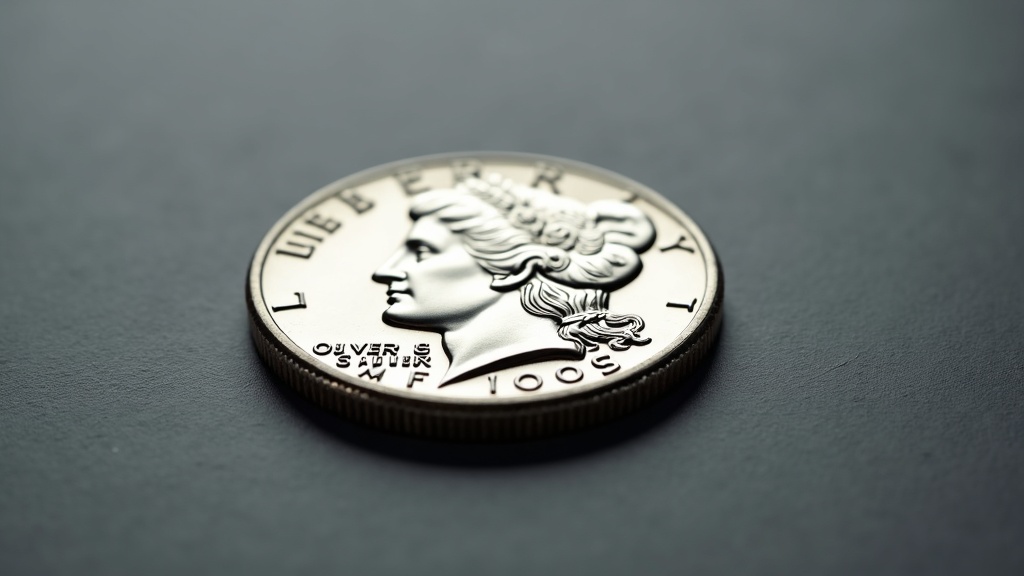
The Peace Dollar is a large silver dollar coin minted by the United States from 1921 to 1935, created specifically to commemorate the end of World War I. Its design shows a profile of Liberty on the obverse and a bald eagle at rest, holding an olive branch, on the reverse, with the word “PEACE” inscribed below. Struck in 90% silver, it followed the Morgan Silver Dollar and represents one of the last large-format silver dollars produced for general circulation in the United States.
For collectors, the Peace Dollar sits at an interesting intersection of art, history, and monetary policy. Understanding why it exists, how its design came about, and what distinguishes valuable examples from common ones helps put the coin in context — whether you inherited one, found it in an old collection, or are simply curious after seeing it mentioned online.
Why the Peace Dollar Was Created
After the Morgan Silver Dollar series ended in 1904, silver dollar production paused for years. It resumed in 1921 when the U.S. Mint struck a final batch of Morgan Dollars before transitioning to a brand-new design. Numismatic organizations at the time, including the American Numismatic Association, had pushed for a coin that would commemorate peace following the armistice that ended World War I in 1918. The idea gained enough support that the Mint held a design competition, and sculptor Anthony de Francisci’s vision — a modern, idealized portrait of Liberty paired with a peaceful eagle — was selected and rushed into production before the end of 1921.
The result was a coin that broke from the more classical, symmetrical Morgan design in favor of something meant to feel forward-looking and optimistic, reflecting the country’s postwar mood. Readers interested in how other circulating coins tell a story about their era may also want to look at the history of the Morgan Silver Dollar, since the two series are often discussed together as bookends of the large silver dollar era.
Design Details Worth Knowing
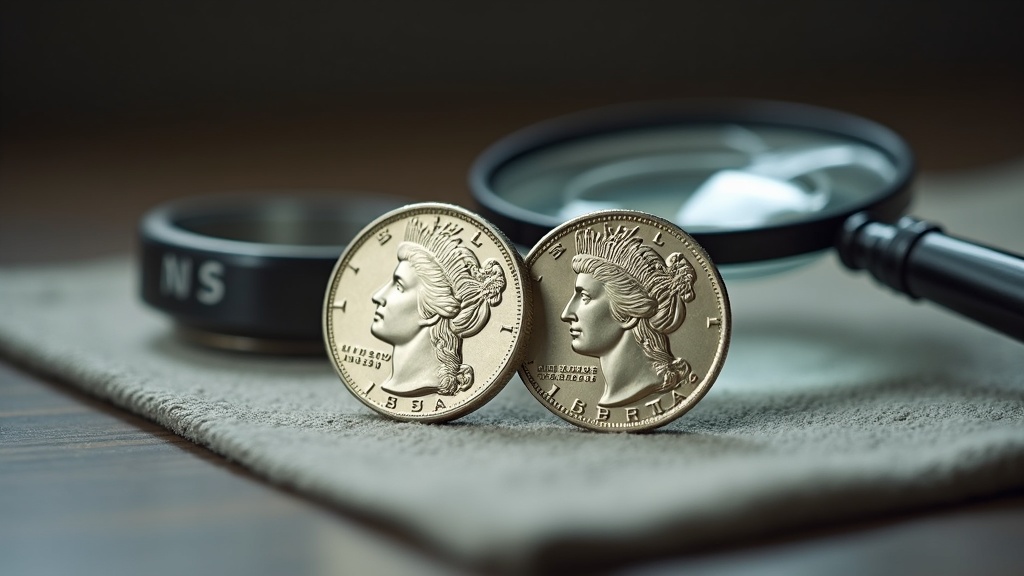
The obverse features Liberty facing left, her hair loose and windswept, wearing a crown-like radiate tiara reminiscent of the Statue of Liberty. The reverse shows a bald eagle perched on a rock, clutching an olive branch, with the sun rising behind it and the word “PEACE” beneath. Early strikes in 1921 used a higher relief that gave the design more depth and dimension, but the Mint quickly shifted to a lower relief for 1922 onward because the higher relief version was harder to strike consistently and wore down dies faster.
This shift means 1921 Peace Dollars look noticeably different from later dates, with more pronounced detail and a slightly different overall appearance. That distinction is one of the first things worth learning if you’re trying to identify what year a Peace Dollar in hand actually is, alongside checking the coin’s mint mark, which appears on the reverse below the “ONE DOLLAR” wording.
Mint Marks and Production Years
Peace Dollars were struck at the Philadelphia, Denver, and San Francisco mints. Coins from Philadelphia carry no mint mark, while Denver coins show a small “D” and San Francisco coins show an “S.” Production ran from 1921 through 1928, paused for several years during the Great Depression, and then resumed briefly in 1934 and 1935 before the series ended. Because the Mint did not produce Peace Dollars every single year in that span, some dates were struck in noticeably smaller quantities than others, which is part of why certain years draw more attention from collectors than others.
If you’re new to reading mint marks and dates generally, the site’s guide on how to read the date and mint mark on a US coin walks through where to look and how that information is typically formatted across different denominations.
What Makes Some Peace Dollars More Notable Than Others
As with most series, a combination of factors determines how significant a particular Peace Dollar is to collectors: the specific date and mint combination, how many were originally struck, how many survive today in collectible condition, and the coin’s physical state of preservation. Coins that saw heavy circulation tend to show wear on Liberty’s cheek and hair and on the eagle’s breast feathers, while coins that were set aside early — sometimes in bank bags that sat untouched for decades — can survive in much sharper condition.
Some date and mint combinations are understood within the hobby to be scarcer than others, a concept covered in more general terms in the site’s explainer on what a key date coin is and why it matters. Rather than memorizing which specific dates carry that reputation from a secondhand source, it’s worth cross-checking against a current reference from a recognized grading service or numismatic organization, since scarcity assessments can be refined over time as more coins are certified and tracked.
How Condition Is Assessed
Like other pre-1965 U.S. silver coinage, Peace Dollars are graded on the Sheldon scale, a numeric system running from heavily worn to pristine mint-state examples. Terms like About Uncirculated (AU) or Mint State (MS) describe general condition tiers, and the guide to what MS, AU, and XF abbreviations mean is a useful starting point if those labels are unfamiliar. Third-party grading services also play a role for buyers and sellers who want a consistent, independent assessment rather than relying on a private opinion, and the article on what grading services actually do explains what that process involves and what it doesn’t guarantee.
It’s also worth understanding what condition problems can affect a coin’s standing with collectors. Cleaning, for instance, is a common issue with older silver coins that were polished at some point by a well-meaning owner, and it can be identified by unnatural shine or hairline scratches under magnification — a topic covered in the site’s guide on how to tell if a coin has been cleaned.
The Silver Content Itself
Peace Dollars are struck in 90% silver and 10% copper, the same standard alloy used across most pre-1965 U.S. silver coinage, including dimes, quarters, and half dollars of that era. This composition is a fixed technical fact about the coin, separate from its collectible or numismatic standing. The metal content sets a baseline related to the coin’s melt value, but that figure moves with the live spot price of silver and is best checked against a current, reputable spot price source rather than an old article, a printed guide, or a number quoted by a salesperson.
A Word on Sales Pressure
Because Peace Dollars are silver and carry historical appeal, they sometimes come up in aggressive sales pitches, particularly from callers or advertisers pushing precious-metals IRAs or “the dollar is collapsing” narratives. A legitimate, reputable dealer does not need to rush you into a decision, and it’s entirely reasonable to ask for time, request documentation, and get an independent second opinion or appraisal before any large purchase — especially one framed as urgent or limited-time. Taking that pause costs nothing and is standard practice among careful buyers.
Getting Started with Peace Dollars
If you’re drawn to this series, a sensible first step is simply learning to identify what you have: check the date, look for a mint mark, and get a sense of overall wear before worrying about anything else. The site’s broader resources on coin basics and identification and on how to start a coin collection from scratch cover the fundamentals that apply just as much to Peace Dollars as to any other series, including how to store coins properly using an album, folder, or holder rather than loose in a drawer or jar.
Frequently asked questions about the Peace Dollar
What years were Peace Dollars made?
Peace Dollars were struck from 1921 through 1928, then again in 1934 and 1935, with a gap in between tied to reduced silver dollar demand and broader economic conditions during the Great Depression era.
How can I tell if my Peace Dollar is silver?
Genuine Peace Dollars from 1921–1935 are 90% silver by design standard. Confirming authenticity involves checking weight, diameter, and edge details, which a local coin dealer or a professional appraisal service can verify more reliably than a home test alone.
What is the difference between a Peace Dollar and a Morgan Dollar?
They’re different design series minted in different eras — Morgan Dollars ran mainly from 1878 to 1904, while Peace Dollars followed from 1921 to 1935. Morgan shows a different Liberty portrait and an eagle with spread wings, while Peace shows a resting eagle and the word “PEACE.”
Why is the 1921 Peace Dollar different from later years?
The 1921 issue was struck in higher relief, giving the design more depth, but this made the coin harder to strike consistently and wore dies down faster. Starting in 1922, the Mint switched to a lower relief version used for the remainder of the series.
Are Peace Dollars worth more than face value?
Their silver content alone generally exceeds face value depending on the current spot price of silver, and certain dates, mint marks, and conditions can carry additional collector interest. A current appraisal or spot price check from a reputable source is the most reliable way to understand any individual coin’s standing.
Gold Coins Today publishes general information about coin collecting and precious metals, not financial, investment, tax or legal advice. We are writers and editors, not certified numismatists, appraisers, financial advisors or dealers. Coin and bullion values change constantly and depend on condition, authenticity and the current market — get a current appraisal or spot price from a qualified, reputable source before buying or selling, and consult a licensed financial advisor before treating precious metals as part of an investment strategy.
Related reading
A Guide to Franklin Half Dollars, The History of the Buffalo Nickel, Understanding the Indian Head Cent.