
Bullion coins and collector coins often start from the same basic process — a blank disc of metal struck between two dies — but mints treat them very differently after that. Bullion coins are produced in large volumes with an emphasis on purity and consistent weight, using standard dies and a single strike meant for the open market. Collector coins, including proofs and special commemoratives, go through extra steps like polished dies, multiple strikes, and hand-finishing that are meant to produce a sharper, more detailed piece rather than the lowest-cost unit of metal.
Understanding this distinction matters whether you’re buying metal for its content or a coin for its design and rarity, because the production method shapes what you’re actually looking at in your hand.
The Shared Starting Point: How Any Coin Begins
Regardless of final purpose, most modern coins begin the same way. A mint starts with coiled sheet metal or pre-made blanks, punches out circular discs called planchets, and then runs those planchets through an annealing and cleaning process to soften the metal and remove residue. The planchets are then fed into a coining press, where a pair of dies — one for the obverse (front) and one for the reverse (back) — strike the design into the metal under enormous pressure, often exceeding many tons of force. A collar die around the edge shapes the rim and, on many coins, adds reeding or lettering.
From here, the paths diverge. If you’re new to how coins are described and classified in general, the Coin Basics & Identification archive is a useful place to see how terminology like “strike,” “planchet,” and “die” gets used across different coin types.
How Bullion Coins Are Minted
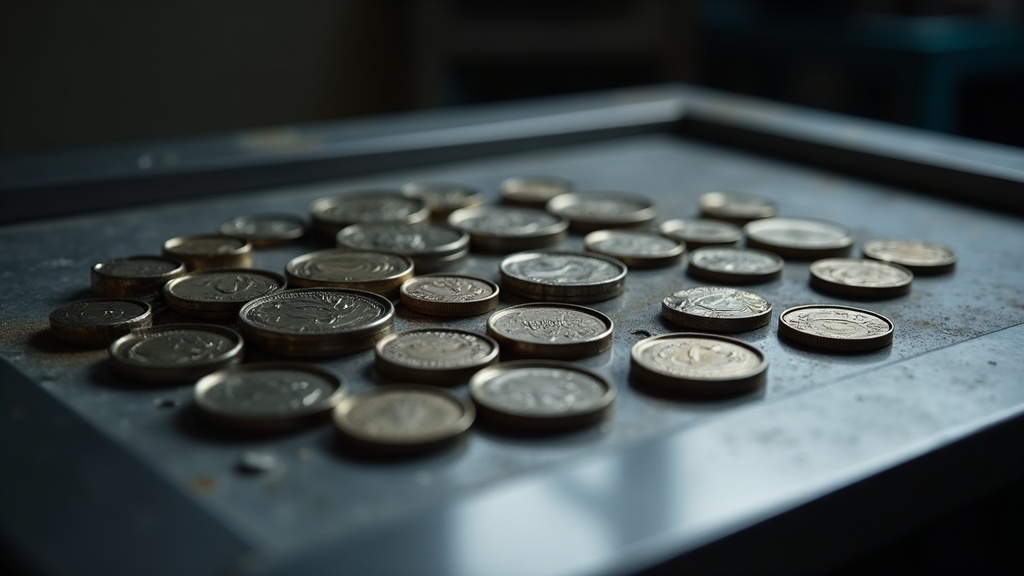
Bullion coins — think American Gold Eagles, American Silver Eagles, Canadian Maple Leafs, Krugerrands, or Austrian Philharmonics — are designed first and foremost to deliver a known weight of precious metal in a recognizable, trusted form. Mints strike these coins using standard dies at high speed, often producing large quantities in a single production run. The finish is typically a “business strike”: planchets pass through the press once, dies are used until they show wear, and the resulting coins have a somewhat frosty or satin surface rather than a mirror finish.
Because bullion coins are valued primarily for their metal content, consistency matters more than perfection. A small die polish line or minor strike softness generally doesn’t affect how the coin functions as a bullion product, since its main draw is guaranteed weight and fineness backed by a national mint. That’s part of why bullion coins are often compared with bars as a way to hold metal — a topic covered in more detail in Bullion Coins vs Bars: What’s the Difference. The purity marked on the coin, whether it’s .999 fine silver or a specific gold fineness, is a technical spec you can read about further in Gold Purity Explained: Karats, Fineness, .999.
Series like the American Gold Eagle also illustrate how a bullion program can carry historical design elements while still being produced primarily as an investment-grade metal product — see The American Gold Eagle: History and Specifications for how that particular coin’s specs and production have evolved.
How Collector Coins Are Minted
Collector coins are made with the finished appearance as the priority, not just the metal content. This category includes proof coins, special uncirculated releases, and commemorative issues struck to mark an anniversary, person, or event.
Proof Coins
Proof coins are struck using specially polished dies, often treated so the coin’s background (the “field”) comes out mirror-like while the raised design elements are given a frosted texture — a contrast known as a cameo effect. Planchets used for proofs are typically hand-selected and polished before striking. The coin may be struck more than once at lower speed and higher pressure than a bullion planchet would be, which brings out finer design details. Proofs are usually handled individually throughout production and packaged carefully to avoid the handling marks that are considered normal on a bullion coin.
Uncirculated Collector Releases and Commemoratives
Some collector coins use a “burnished” or specially prepared planchet that gives a satin-like finish, distinct from both a standard business strike and a full proof. Commemorative coins, which national mints issue to recognize historical milestones or causes, may use unique designs and limited mintages, and are often sold directly by the mint in special packaging with certificates of authenticity. If you want to see how one country’s mint approaches this category, Understanding Commemorative Coins From the US Mint walks through how those programs typically work.
Key Differences at a Glance
| Factor | Bullion Coins | Collector Coins |
|---|---|---|
| Primary purpose | Deliver known metal weight and purity | Showcase design detail and craftsmanship |
| Die preparation | Standard dies, used until worn | Polished or specially treated dies |
| Planchet handling | Bulk-fed, minimal individual handling | Often hand-selected and polished |
| Strike count | Usually a single strike | Often struck more than once |
| Surface finish | Frosty or satin business-strike look | Mirror fields, cameo contrast, or matte finish |
| Production volume | Typically large mintages | Often limited or lower mintages |
Why the Production Method Matters to a Buyer
The way a coin is minted shapes what determines its value later. For a bullion coin, weight and purity are the anchor, and its condition matters mainly in the sense that heavy scratches or damage can affect resale, but a typical bullion piece isn’t expected to be flawless. For a collector coin, the strike quality, surface preservation, and eye appeal can matter enormously, which is part of why third-party grading exists — you can read about how that process actually works in What Third-Party Grading Services Actually Do.
It’s also worth remembering what actually drives a coin’s or bar’s underlying worth: purity, weight, rarity, condition, and market demand, not the marketing language stamped on a box. For a broader explanation of how melt value is calculated separately from collector premiums, see What Determines a Coin’s Melt Value. And if you’re exploring precious metals more broadly, the Precious Metals & Bullion hub brings together coverage of bullion coins, bars, and purity standards in one place.
Because this space attracts aggressive sales pitches — particularly around gold IRAs and “the dollar is collapsing” style urgency — it’s reasonable to treat high-pressure tactics as a red flag. A legitimate dealer or mint program doesn’t need to rush you, and getting a second opinion or an independent appraisal before a large purchase is a normal, sensible step rather than an insult to anyone selling you the coin.
Frequently asked questions about how bullion coins are minted vs collector coins
What’s the difference between a bullion coin and a proof coin?
A bullion coin is struck once with standard dies for efficient large-scale production, while a proof coin is struck with specially polished dies, often more than once, to produce sharper details and a mirror-like or frosted finish meant for collectors rather than metal content alone.
Are bullion coins worth less than collector coins?
Neither is inherently worth more; they’re valued differently. Bullion coins track metal weight and purity closely, while collector coins can carry additional value tied to rarity, condition, and demand — an independent appraisal or current spot price is the way to assess either accurately.
Can a bullion coin also be a collector coin?
Yes. Many bullion programs, like certain gold and silver eagles, also release special proof or burnished versions in limited numbers, which are marketed to collectors even though the underlying coin series is primarily a bullion product.
Why do proof coins cost more to produce than bullion coins?
Proof production involves hand-selected planchets, polished dies, slower striking speeds, multiple strikes, and careful individual handling and packaging, all of which take more time and labor than the high-speed, bulk process used for standard bullion coins.
Do collector coins contain the same purity as bullion coins?
Not always. Some collector and commemorative coins are struck in the same fineness as bullion products, but others use different alloys or lower purity levels intended for durability or design reasons, so it’s worth checking the specific coin’s stated fineness rather than assuming.
Gold Coins Today publishes general information about coin collecting and precious metals, not financial, investment, tax or legal advice. We are writers and editors, not certified numismatists, appraisers, financial advisors or dealers. Coin and bullion values change constantly and depend on condition, authenticity and the current market — get a current appraisal or spot price from a qualified, reputable source before buying or selling, and consult a licensed financial advisor before treating precious metals as part of an investment strategy.