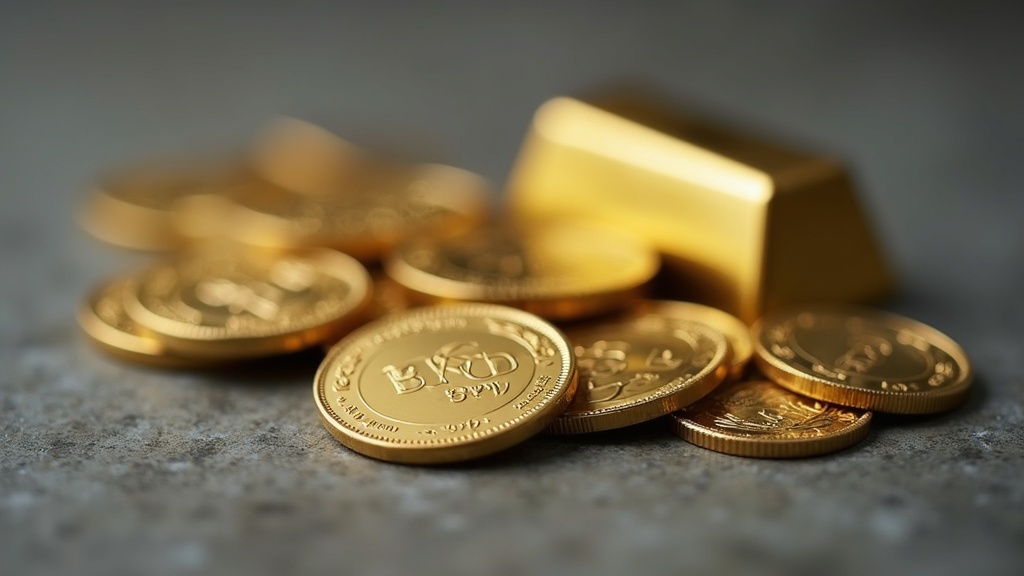
Gold purity is measured two ways: karats, an old scale of 24 parts where 24K is pure gold, and fineness, a decimal scale out of 1,000 where .999 means 999 parts pure gold per thousand, or 99.9% pure. Most bullion coins today are stated in fineness (.999 or .9999), while jewelry is usually stated in karats (18K, 14K, and so on). Neither number tells you what a coin is worth by itself — that depends on weight, condition, and current market prices, which are best checked with a live source rather than assumed.
Karats: the older, jewelry-era scale
The karat system divides gold into 24 equal parts by weight. Pure gold is 24 karat. If a piece is 18 karat, 18 of those 24 parts are gold and the remaining 6 parts are other metals — usually copper, silver, or nickel — added for color or hardness. This system is used almost everywhere for jewelry and shows up occasionally on older coinage, but it’s rarely used for modern bullion products, which nearly always quote fineness instead.
Common karat values and their approximate gold content:
- 24K — 99.9% pure gold (effectively pure)
- 22K — 91.7% pure gold
- 18K — 75.0% pure gold
- 14K — 58.3% pure gold
- 10K — 41.7% pure gold
Notice that 22K appears often in historic and circulating gold coinage — the British sovereign and many older gold coins used this standard because pure 24K gold is quite soft and wears down faster in circulation or handling.

Fineness: the modern bullion standard
Fineness expresses purity as parts per thousand rather than parts per 24. A coin marked “.999 fine” is 99.9% gold; one marked “.9999” is 99.99% gold, sometimes called “four nines” fine. This scale is more precise than karats and is the standard used on the certificates and mint documentation for most government-issued bullion coins produced in the last several decades.
Here’s how the two scales line up for reference:
| Karat | Approx. Fineness | Gold Content |
|---|---|---|
| 24K | .999–.9999 | 99.9%–99.99% |
| 22K | .916–.917 | 91.6%–91.7% |
| 18K | .750 | 75.0% |
| 14K | .583–.585 | 58.3%–58.5% |
| 10K | .417 | 41.7% |
Why some bullion coins aren’t pure 24K
A pure 24K coin is soft enough to scratch and dent easily, which matters for a product meant to circulate through dealers, collectors, and storage facilities over decades. Some mints solve this by alloying the coin slightly, others keep it at .999 or .9999 and accept the softness, relying on protective packaging or third-party holders instead. The American Gold Eagle is a well-known example of a coin alloyed with small amounts of silver and copper for durability, while the Canadian Maple Leaf and the Austrian Philharmonic are produced at .9999 fine. The Krugerrand uses a copper alloy that gives it a distinctive warmer color compared to purer coins. None of these approaches is inherently “better” — they reflect different design choices about hardness, color, and tradition.
How purity is actually verified
Mints stamp fineness or karat marks directly onto coins and bars, and reputable issuers back this with published specifications. Beyond trusting the stamp, there are a few general ways purity gets checked or confirmed:
- Weight and dimension checks — gold has a very specific density, so a coin that’s the wrong weight for its stated size is a red flag.
- Electronic and acid testing — used by professionals to estimate metal composition without damaging the piece significantly.
- X-ray fluorescence (XRF) analysis — a non-destructive method used by serious dealers and grading services to measure elemental composition.
- Third-party grading and authentication — encapsulation services examine a coin’s authenticity and condition, which is different from a fineness assay but often reassures buyers about a coin overall. If you’re curious how that process works, see our explainer on what grading services actually do.
For everyday buyers, the most practical step is simply buying from an established mint or reputable dealer whose specifications are publicly documented, rather than trying to test metal composition at home.
Purity is not the same as value
It’s worth repeating because it’s the single most common point of confusion: a fineness or karat number tells you the proportion of gold in an object, not its price. Value is shaped by the current market price of gold (which moves constantly), the coin’s total weight, its condition, and — for numismatic or historic pieces — rarity and collector demand. A worn, common-date coin and a pristine, low-mintage coin can carry very different premiums even at identical fineness. If you want a sense of what actually drives value beyond the metal itself, our guides on what makes a coin a key date and how coin grades are abbreviated are good starting points. For any current dollar figure, check a live spot price from a reputable financial source or get an independent appraisal rather than relying on a number you saw somewhere else.
A note on sales pressure
Gold purity comes up constantly in high-pressure sales pitches — “the only truly pure gold,” “government-guaranteed fineness,” or urgency around economic fear. Legitimate mints and dealers don’t need scare tactics to sell a product whose specifications are already public and verifiable. If you’re considering a significant purchase, especially through a gold IRA program or a dealer who’s pushing you to decide quickly, it’s entirely reasonable to pause, get a second opinion, or have the item independently appraised before committing. This applies whether you’re new to the hobby or have been collecting for years — for those just getting oriented, our overview on coin collecting terminology can help make sense of the language dealers use.
Frequently asked questions about gold purity
What does .999 gold mean?
.999 fine gold means the item is 99.9% pure gold by weight, with the remaining 0.1% made up of trace other metals. It’s one of the most common fineness levels used for modern gold bullion coins and bars worldwide.
Is 24K gold the same as .999 fine?
They’re very close but not always identical. 24K is generally understood as pure gold, and mints typically express that purity as .999 or .9999 fine on their bullion products, though exact rounding conventions can vary slightly by country and mint.
Why isn’t all gold coinage 24 karat?
Pure 24K gold is soft and prone to scratching or denting, so some mints alloy their coins with small amounts of silver or copper to improve durability, especially for coins meant to be handled, stacked, or stored long-term rather than kept in sealed holders.
How can I tell if a gold coin is really the purity it claims?
Look for official mint markings and published specifications, check that weight and dimensions match those specs, and consider having an uncertain piece examined by a professional using non-destructive testing or reviewed through a third-party grading service.
Does higher purity always mean a coin is worth more?
Not necessarily. Higher fineness generally means more gold content by proportion, but total value also depends on the coin’s total weight, its condition, and, for collectible pieces, rarity and demand — a current appraisal or spot price check is the reliable way to understand value.
The exact figures
The FTC’s Jewelry Guides treat fine (24 karat) gold as the unalloyed metal and describe lower karat figures as alloys. Because karat is a count of 24ths, the exact gold share of each common karat is the number over 24:
| Karat | Exact gold share | Fineness |
|---|---|---|
| 24K | 100% | 1.000 (bullion is stated .999 to .9999) |
| 22K | 91.67% | .9167 |
| 18K | 75.00% | .750 |
| 14K | 58.33% | .5833 (often stamped 585) |
| 10K | 41.67% | .4167 |
Real coins show both systems. The U.S. Mint reports the American Gold Eagle as 91.67% gold, the Royal Mint lists the Krugerrand at fineness 916.7, and the Royal Mint, Royal Canadian Mint and Austrian Mint list the Britannia, Maple Leaf and Philharmonic at 999.9 or 99.99%. To convert a weight and karat into pure gold, use the karat and weight calculator.
Gold Coins Today publishes general information about coin collecting and precious metals, not financial, investment, tax or legal advice. Articles on this site are drafted with AI assistance (see our editorial policy) and are not written or reviewed by certified numismatists, appraisers, financial advisors or dealers. Coin and bullion values change constantly and depend on condition, authenticity and the current market — get a current appraisal or spot price from a qualified, reputable source before buying or selling, and consult a licensed financial advisor before treating precious metals as part of an investment strategy.